The Bullhorn & The Biggal-Fool: Re-Imagining Scilly’s Lost Mazey Folklore
Sharing some more details of the artworks we made for the Vanishing Labyrinths of the Isles of Scilly exhibition at St Agnes Island Hall: The Bullhorn & The Biggal-Fool. These characters were first developed for the mummers’ play we performed at the Celebratory Reopening of Giant’s Castle Maze in summer 2025, but which we later photographed and included in the exhibition of original labyrinth-inspired artworks.
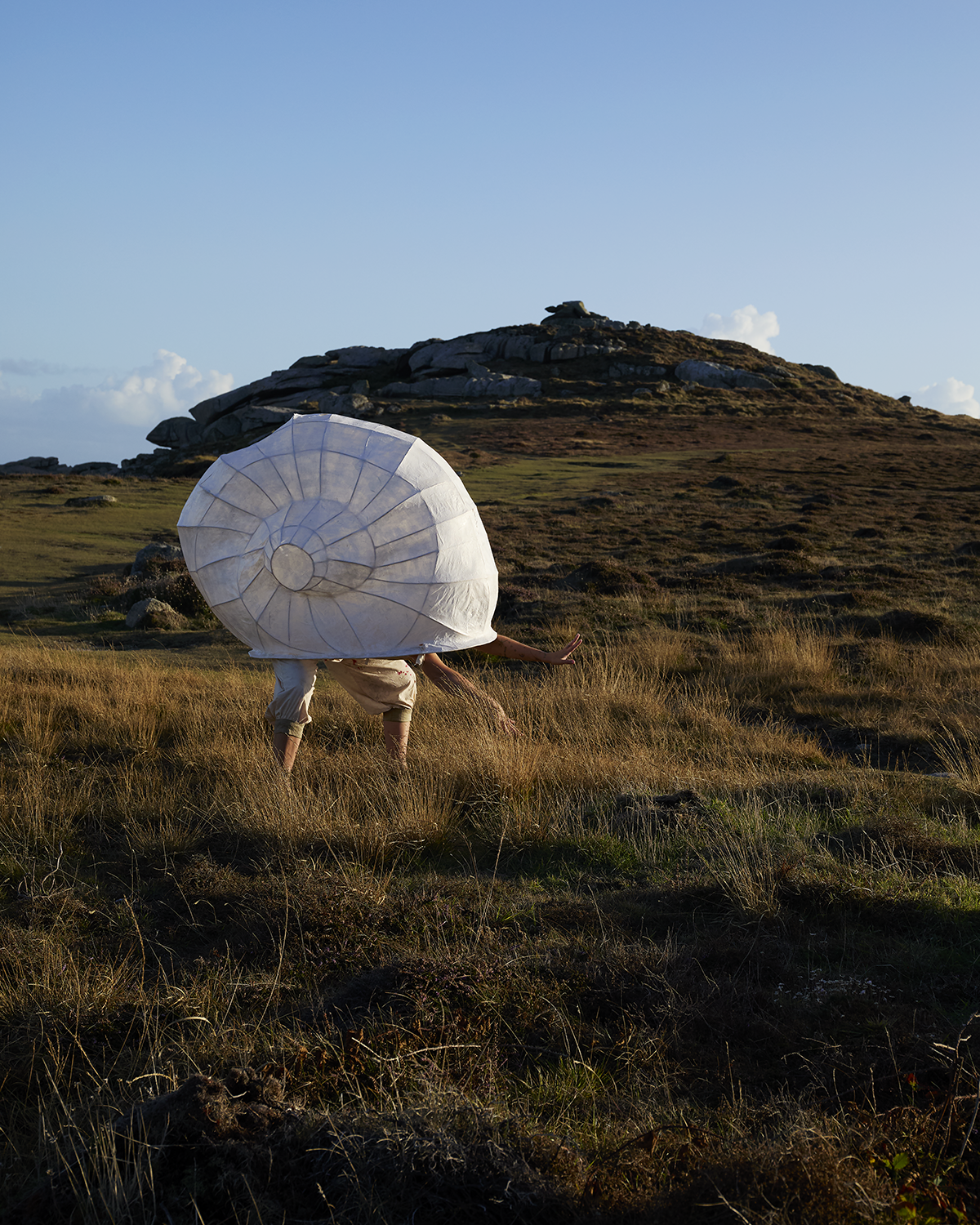
The Bullhorn…
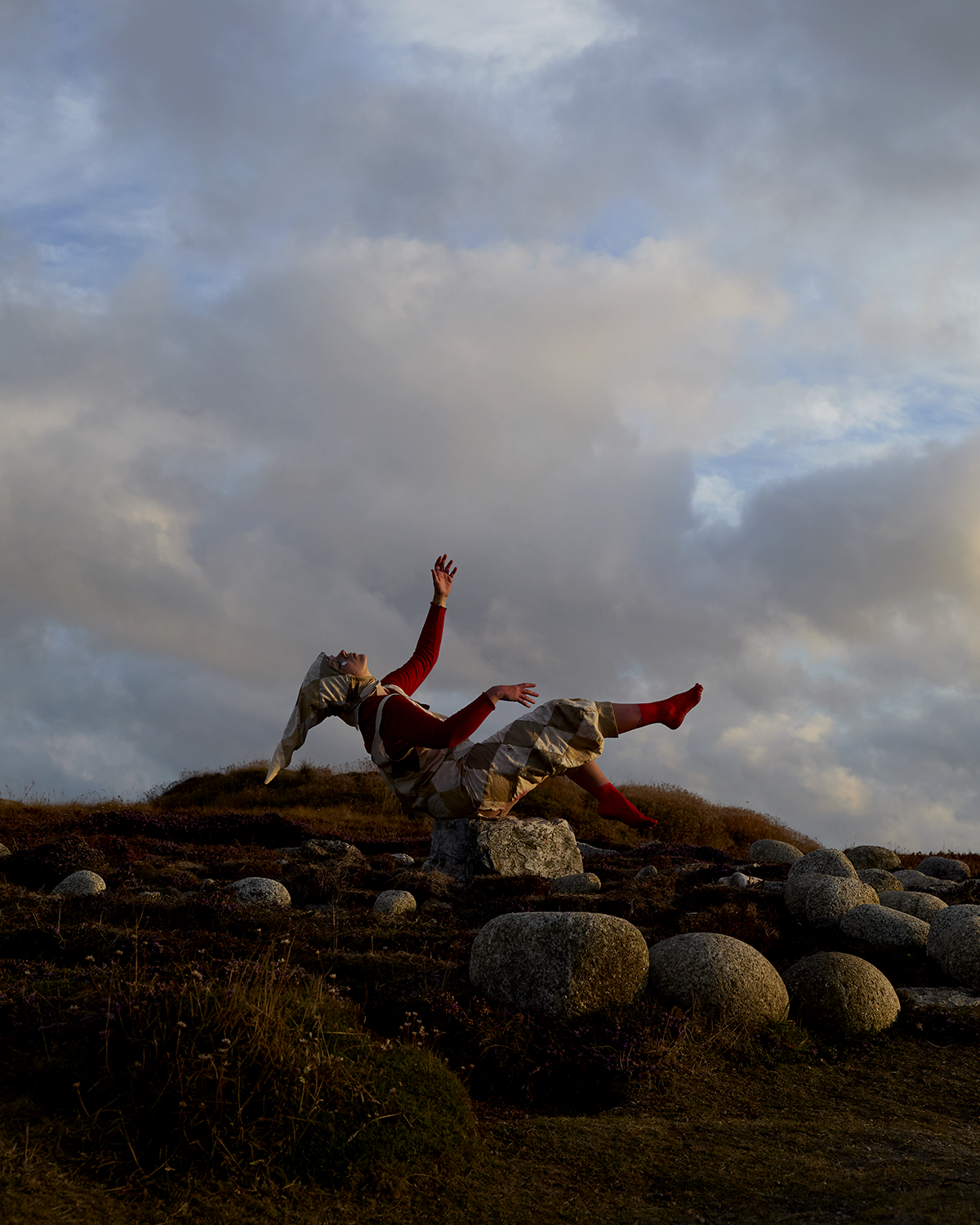
The Biggal-Fool…
The Isles of Scilly do not have much folklore at all, the lack of which is thought to be due to periods of huge depopulation - particularly in the mid 19th Century - when much of the oral storytelling tradition of the islands was lost. But we do have plenty of incredibly inspiring landscapes, littered with strange relics from the past - like the pebble labyrinths - from which to extrapolate and reimagine what these lost stories might have been. Using Giant’s Castle Maze as a point of departure, the character of the Bullhorn was created as a reimagined Minotaur myth for the Isles of Scilly, inspired by Charles Fréger‘s photography project of Wildermann folk costumes - documenting the archetype of the wild-made-manifest in the folk cultures of Europe.
Fréger says of this “search for the figure of the savage as it survives in local popular traditions” that:
“These images, like archetypes, half-man half-beast, animal or vegetable, resurface from the depths of time on the occasion of ritualistic, pagan or religious festivals, celebrating the cycle of the seasons, the fat days, carnival or the eve of Easter. In the common fund of the European rural societies, these characters or emblematic animals represented protective figures or symbols of fertility. Today they evoke an imaginary, impulsive and physical world where everyone perceives an ancestral relationship with nature where the springs of our animality and sometimes the regressive desire inherent in some of our behaviours emerge.”
On learning that the Cornish word for “snail” is “bullhorn” and linking the traditional Cornish Snail Creep dance with the spiralling coils of the labyrinth, and also with the Crane Dance that Theseus danced in Delo after slaying the bull-like Minotaur, guardian of the labyrinth - the idea of a fearsome snail-like Wildermann should guard the Giant’s Castle labyrinth seemed the obvious choice for our reimagined Scillonian folklore.
“After arriving in Delo while he was returning from Crete … Theseus danced with the young Athenians a dance still performed by the inhabitants of the island, consisting of twisting and twisted movements that reproduce the shapes of the labyrinth. Dicearchos states that this dance is called Crane” - Plutarch, Theseus, 21
The Bullhorn materialises each Lammastide on Salakee Down to guard Giant’s Castle Maze until it can be soothed and tamed, by it’s counterpart character: The Biggal-Fool.
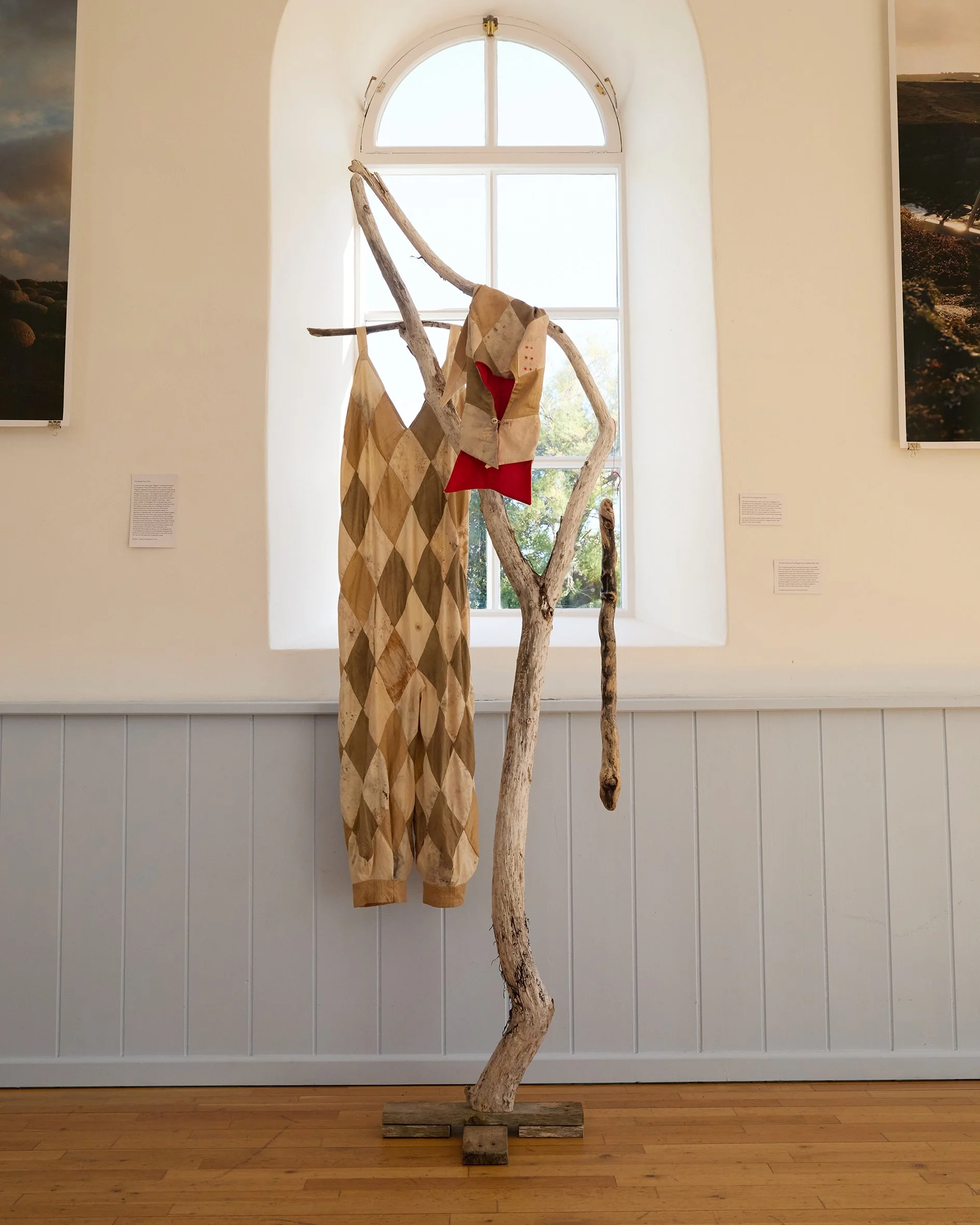
The Biggal-Fool’s diamond-patterned jester motley costume…
The Biggal-Fool character was created as a counterpoint-companion to the monstrous, Minotaur-inspired Bullhorn: guardian of the Giant’s Castle labyrinth. But unlike the violent Theseus from the original Greek myth, the Biggal-Fool must approach the monster with playful caution to win its trust and lead it from the maze, so that it may bestow its blessings.
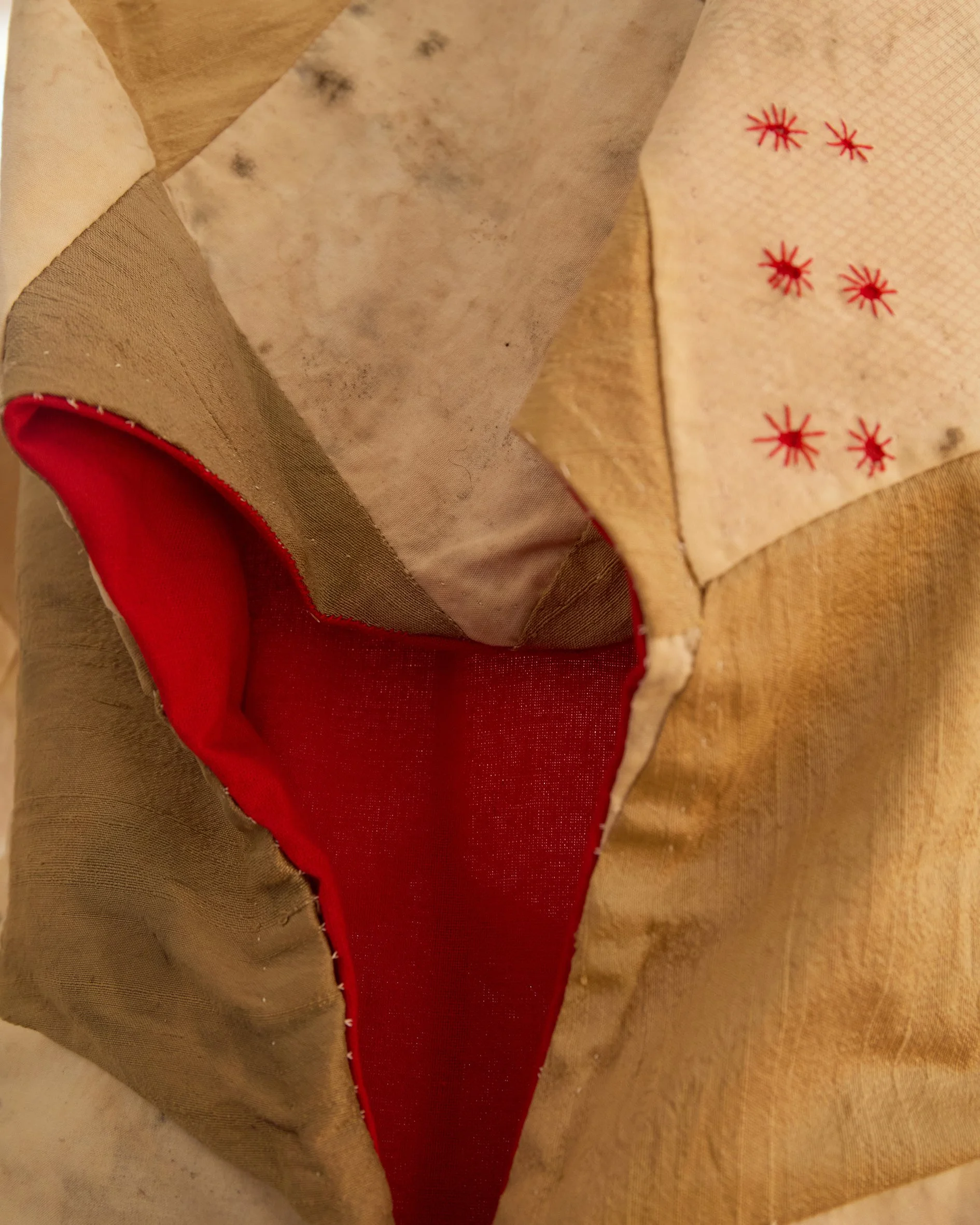
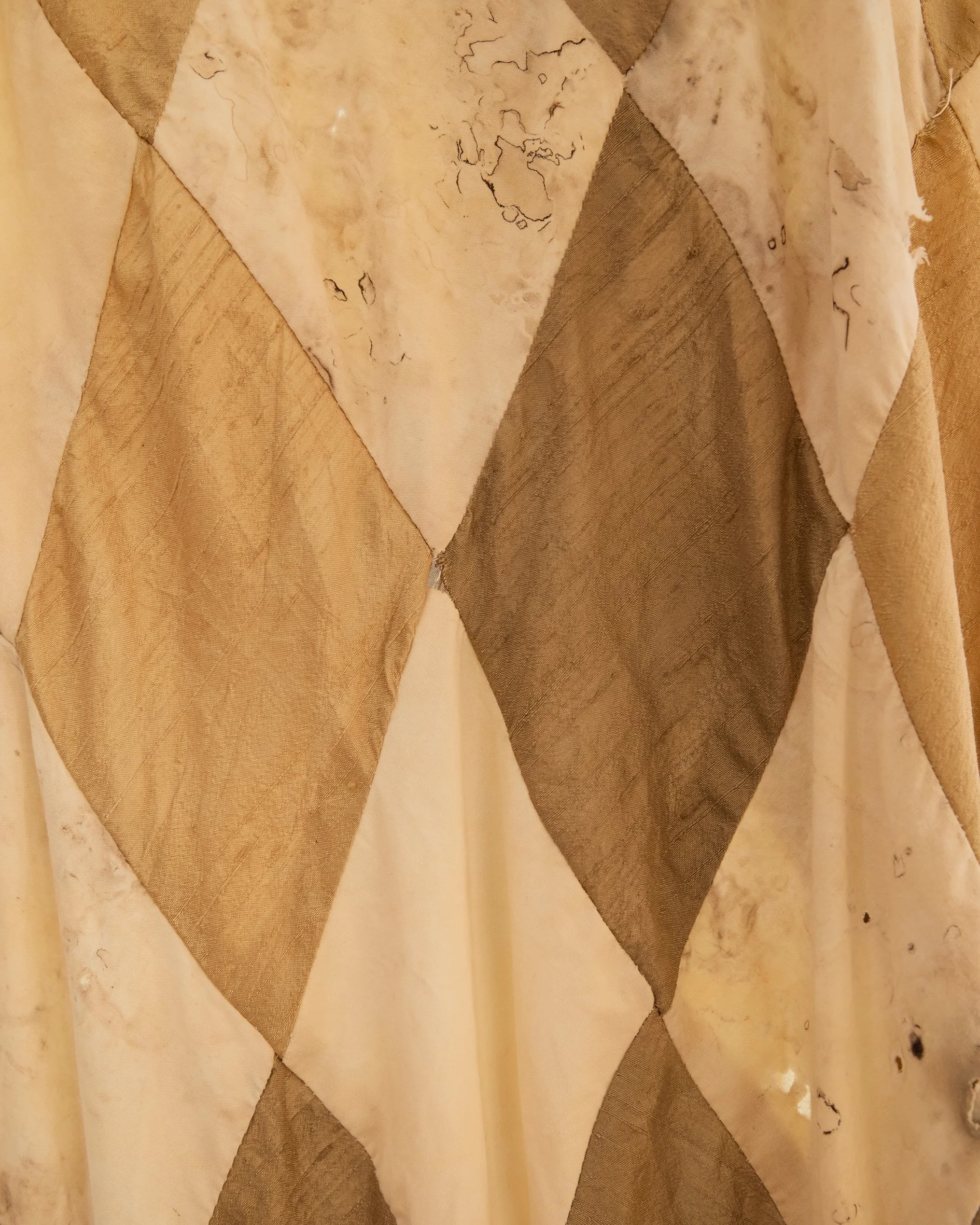
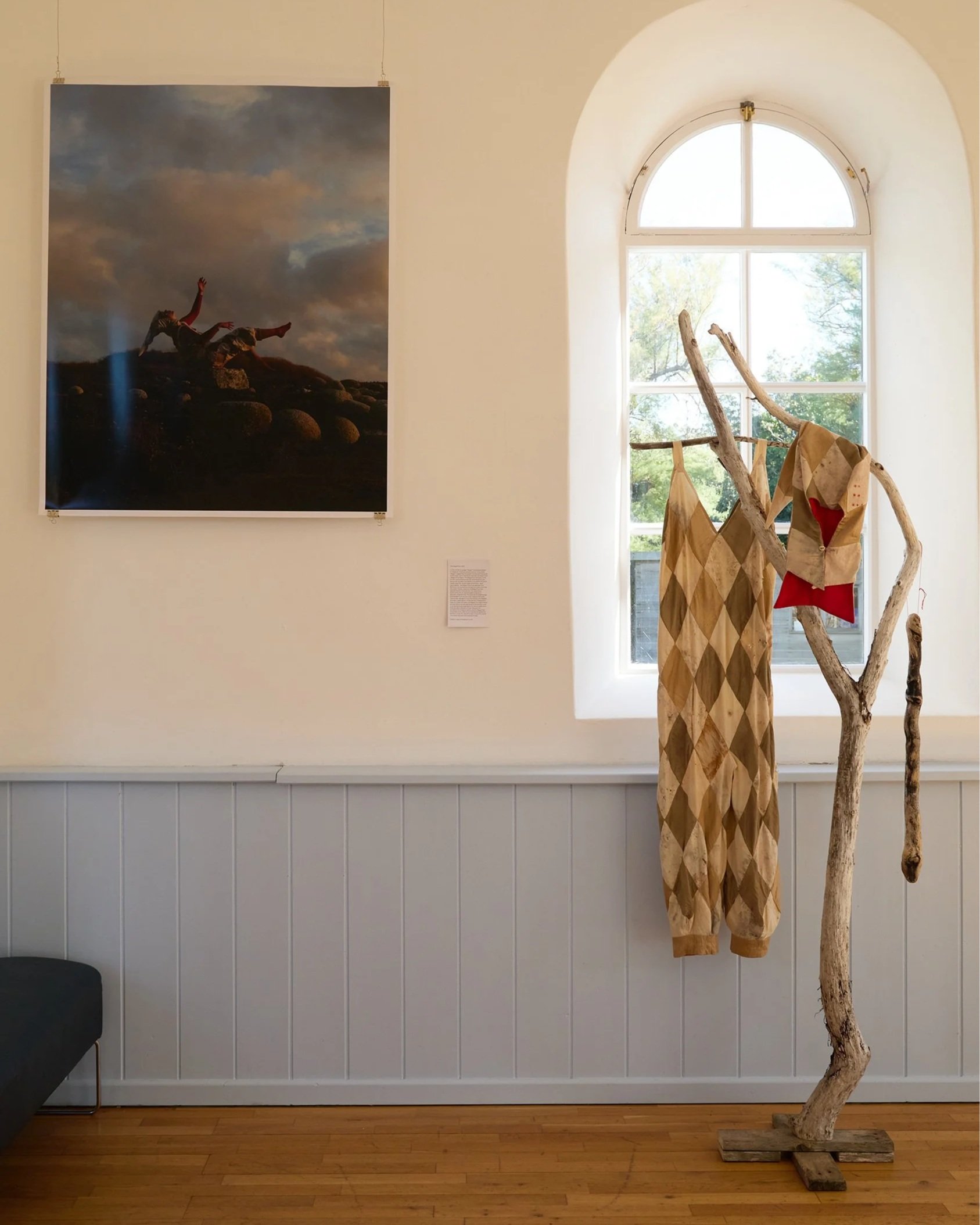
The Biggal-Fool’s costume was made from silk dyed with Scillonian elm and contact-dyed cotton left to moulder, and then sewn into a jester’s motley. The costume was exhibited alongside these photographs of the fool at Giant’s Castle Maze, and with the Biggal'-Fools sword-stick, an incredible naturally formed cutlas-shaped stick (discovered on the uninhabited island of Samson) which the Biggal-Fool uses to tap the Bullhorn’s shell, before ceremonially discarding it and adopting a gentler and more humorous approach to taming the beast.
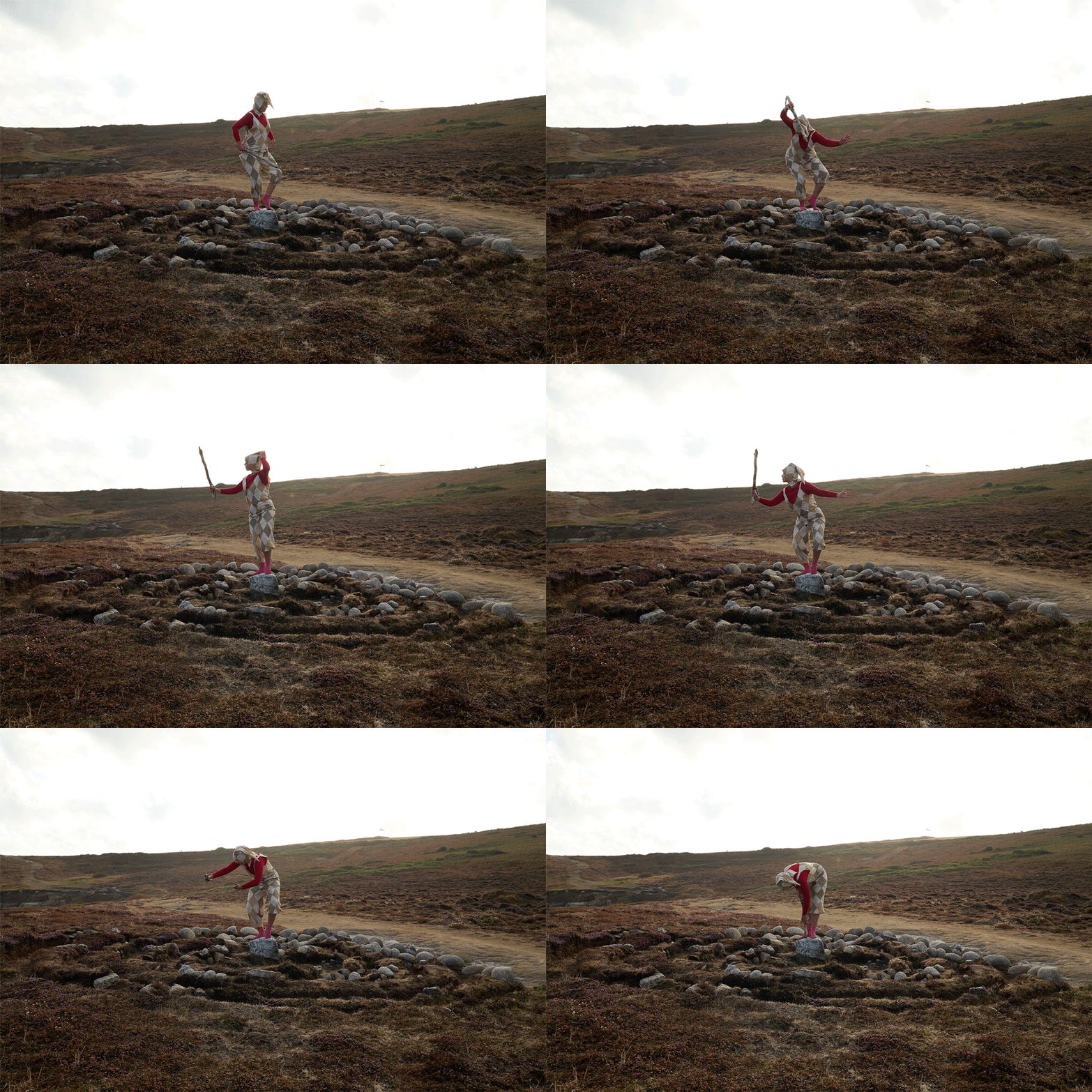
The Biggal-Fool wields thier sword-stick…
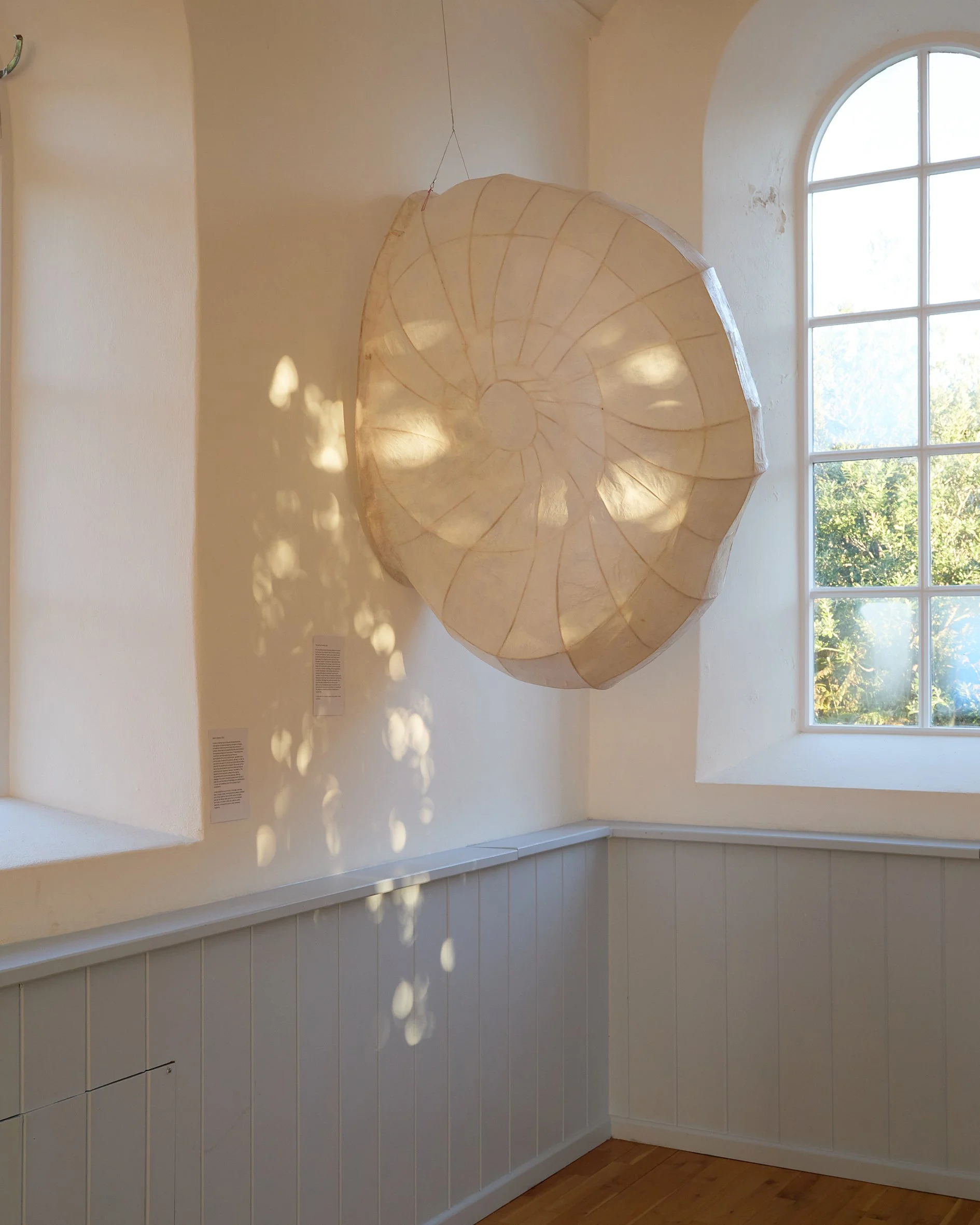
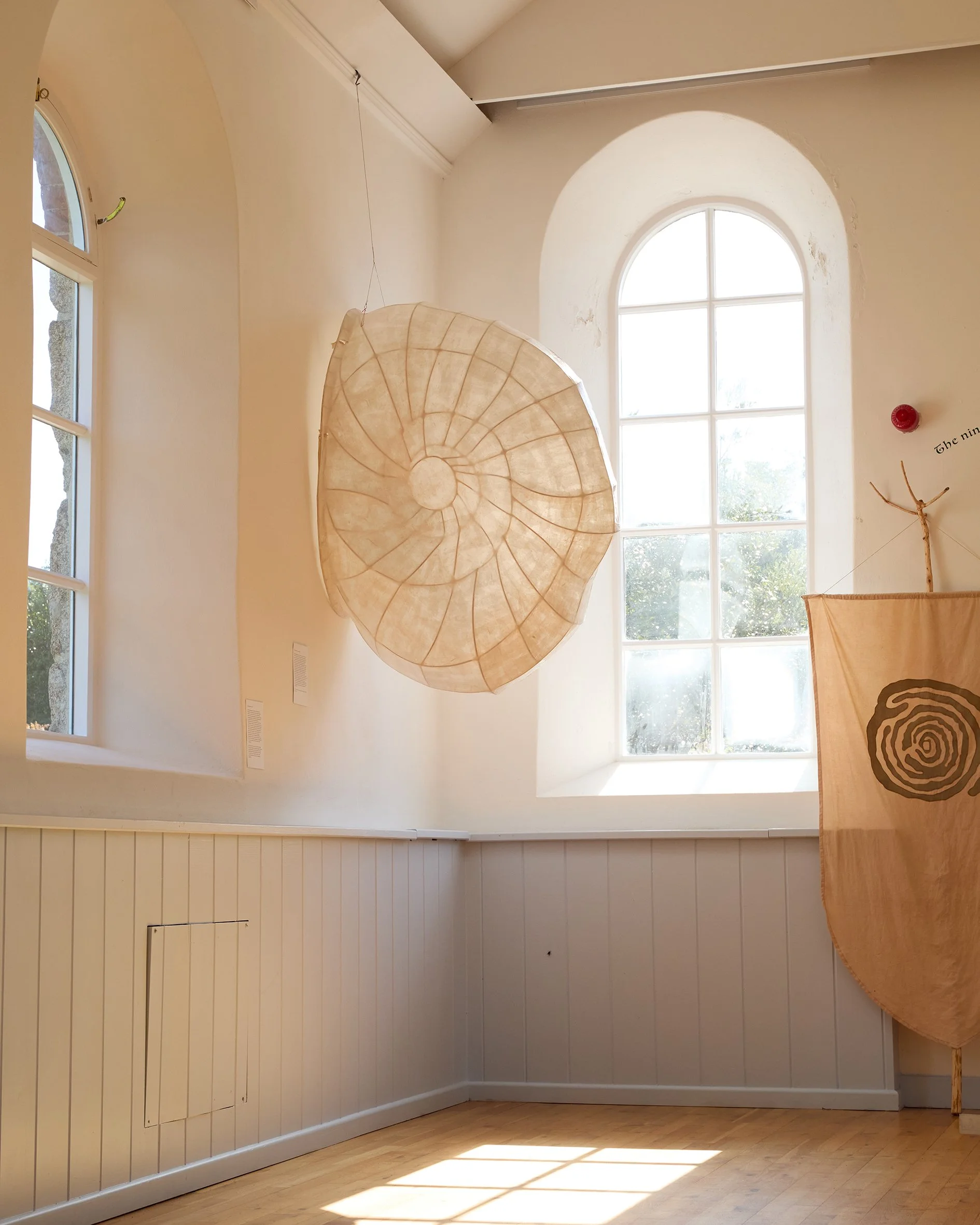
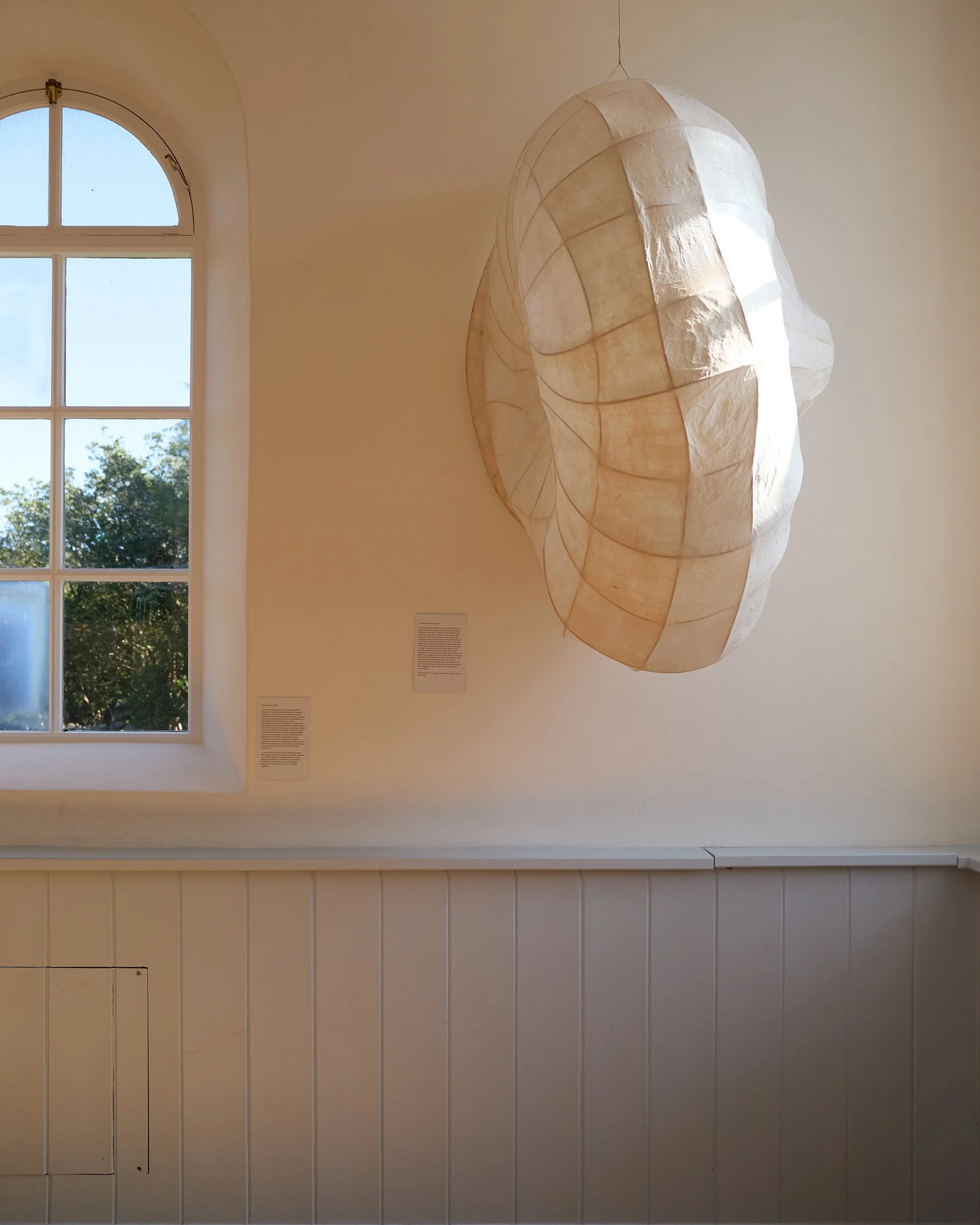
The Bullhorn’s enchanted shell…
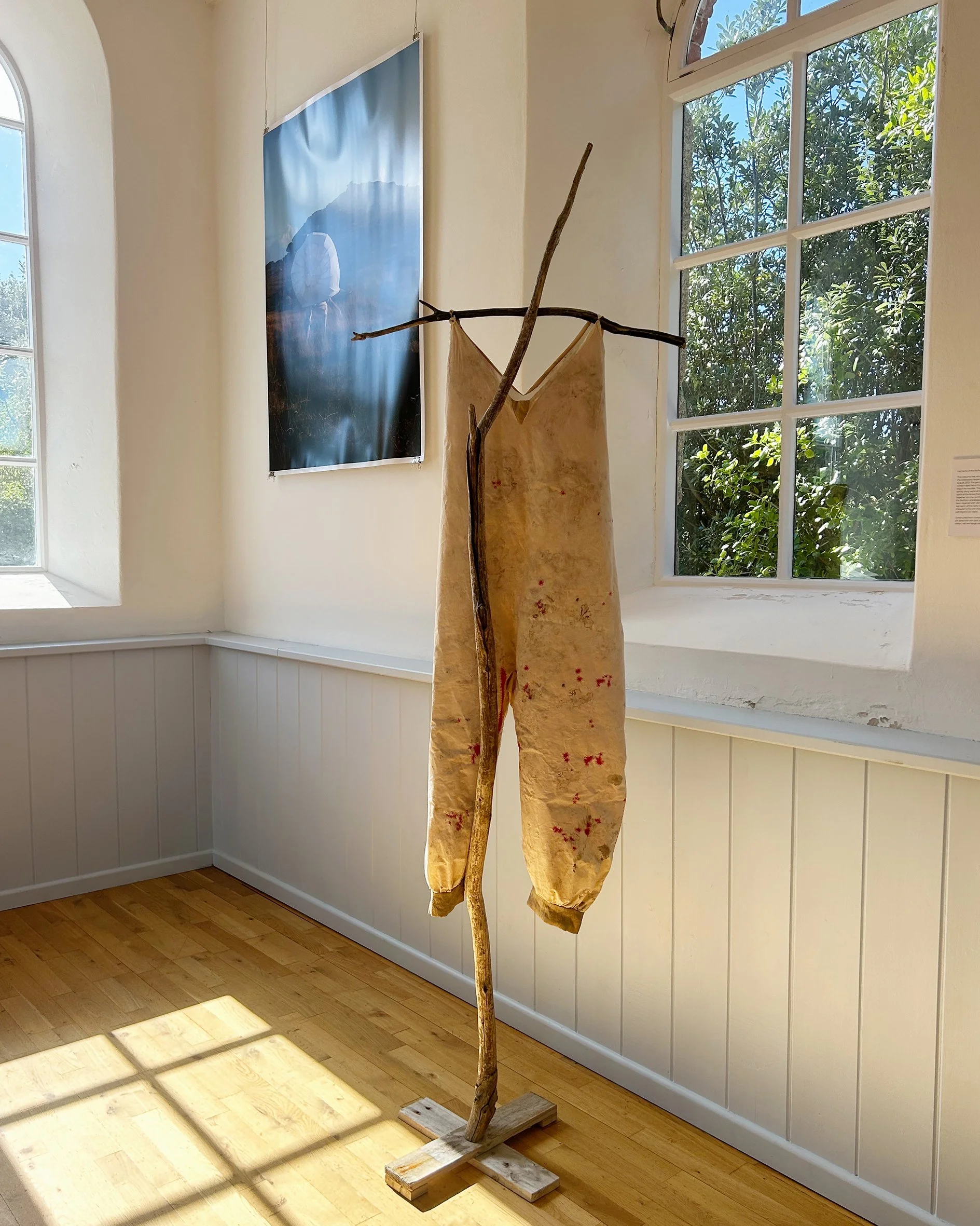
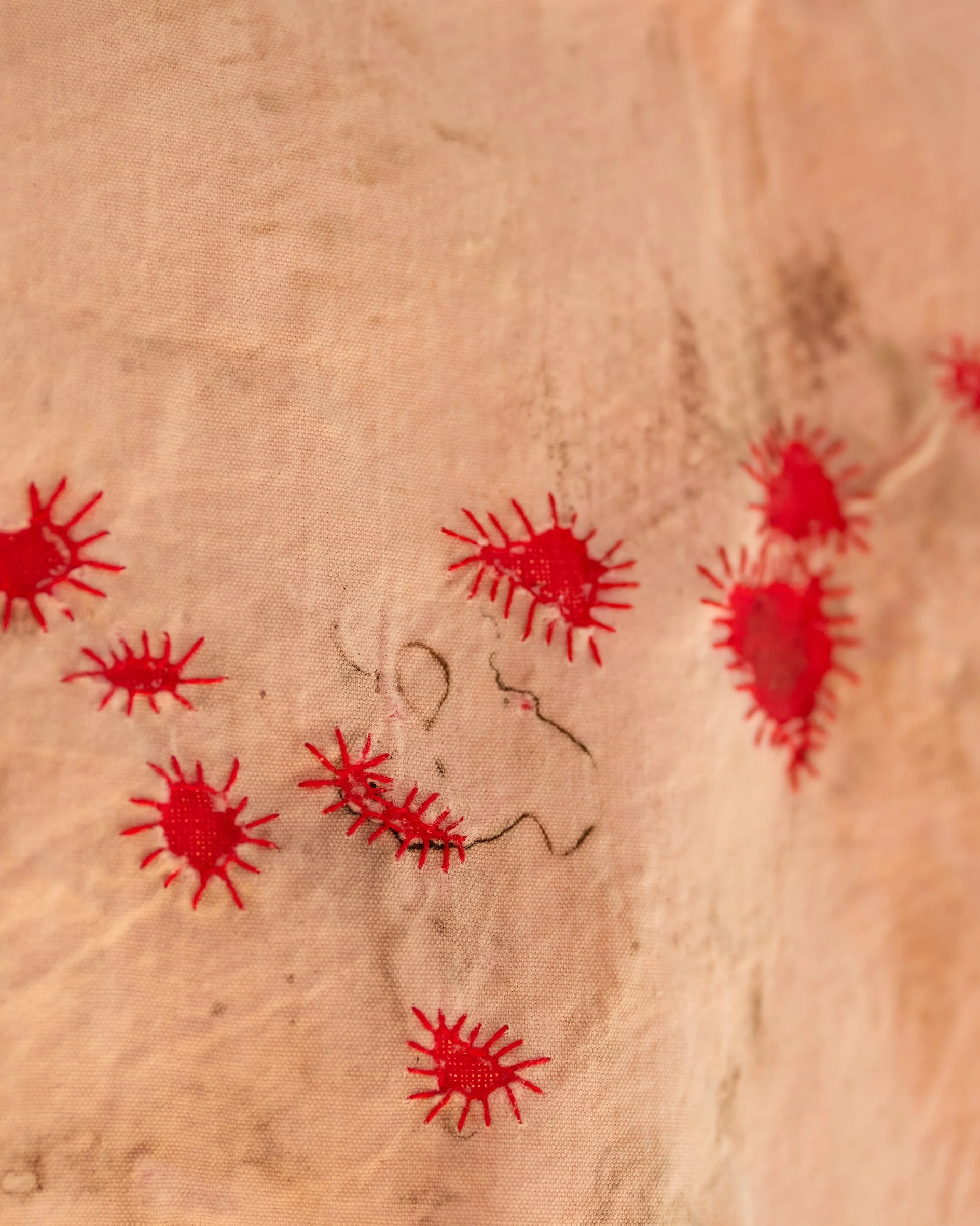
Both the shell and the slime suit were displayed in the exhibition. The Bullhorn’s shell is made from enchanted papier-mâché. The fabric for the Bullhorn’s costume was given its mouldy patina from contact dyed with plants from St Mary’s, left too long. It must be mended often, stitched with red thread (red is the colour of the Celtic otherworld) in order to contain the Bullhorn’s snail slime and stop all the luck from leaking out (snails are believed to be lucky in Cornwall).
“Lucky snail, lucky snail, go over my head, and bring me a penny before I go to bed”
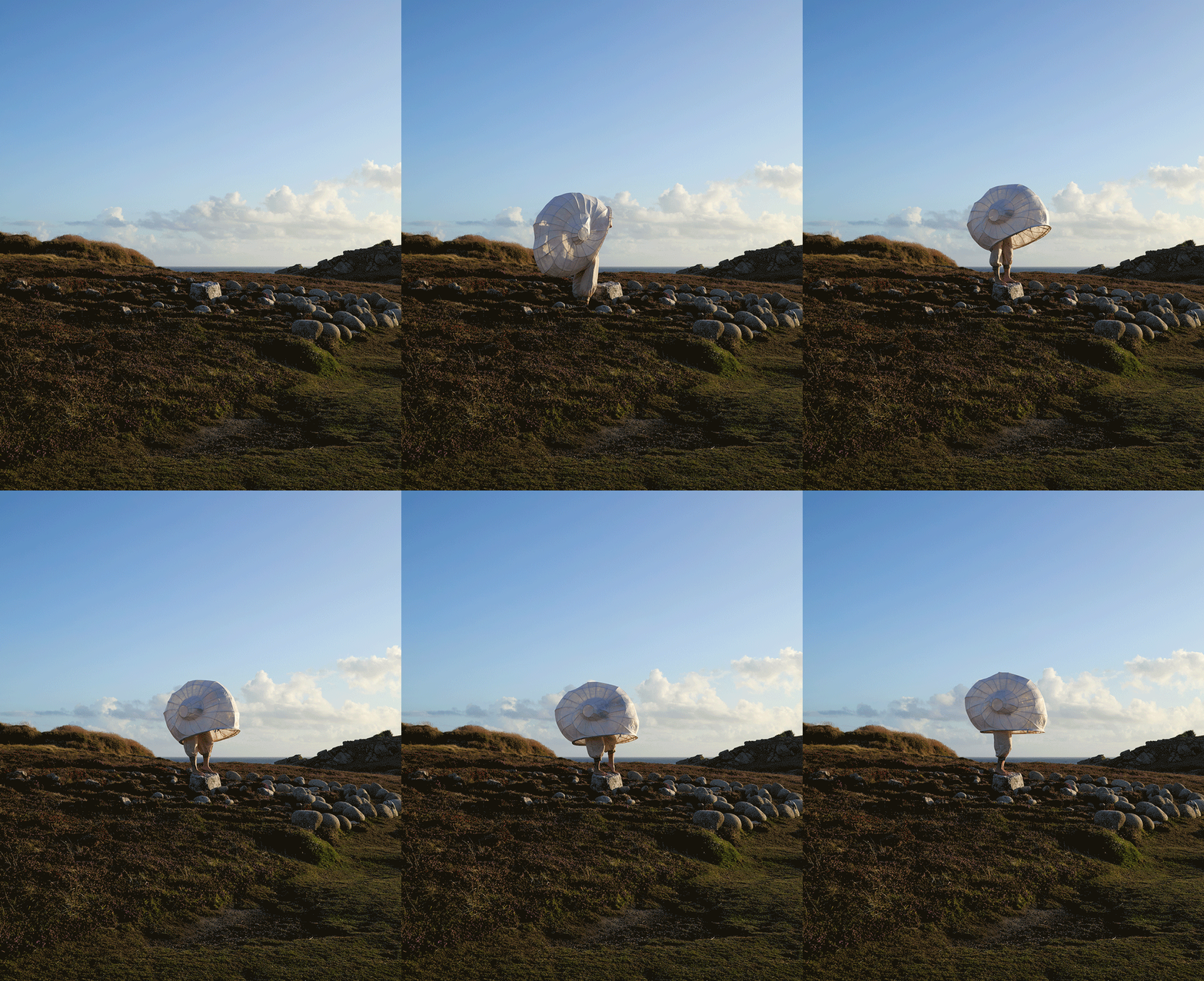
The fierce Bullhorn guards the centre of Giant’s Castle Maze on a windy day…