Giant’s Castle Pageantry: The Bullhorn & The Biggal Fool
The old folklore of Scilly - preserved by islanders in an oral tradition - is believed to have been lost when the islands underwent massive depopulation in the 1830s. Today, Scilly has very little folklore or local mythology compared to neighbouring Cornwall, despite the landscape of the islands being so inspiring to artists and story tellers throughout history, and possessing to so many interesting sites - like the labyrinths - which spark curiosity and imagination. Faced with this absence of Scillonian folklore, we reversed-engineered some folk practices and tales of our own - extrapolated from the labyrinths - to celebrate the reopening of Giant’s Castle Maze.
One of the folk practices we created was a mummers’ play, which is a kind of amateur theatrical performance with Medieval origins, performed by “mummers” or “guisers” practiced throughout the country, often at specific festivals through the wheel of the year. West Cornwall and Scilly have a history of “guise dancing” or “goose dancing” associated withe the Winter Solstice and New Year, and the mummers’ play George and the Dragon is often performed on the island of St Agnes at May Day (if there aren’t enough children in the school to do maypole dancing that year), so it felt appropriate to create a mummers’ play for our high summer labyrinth festival too.
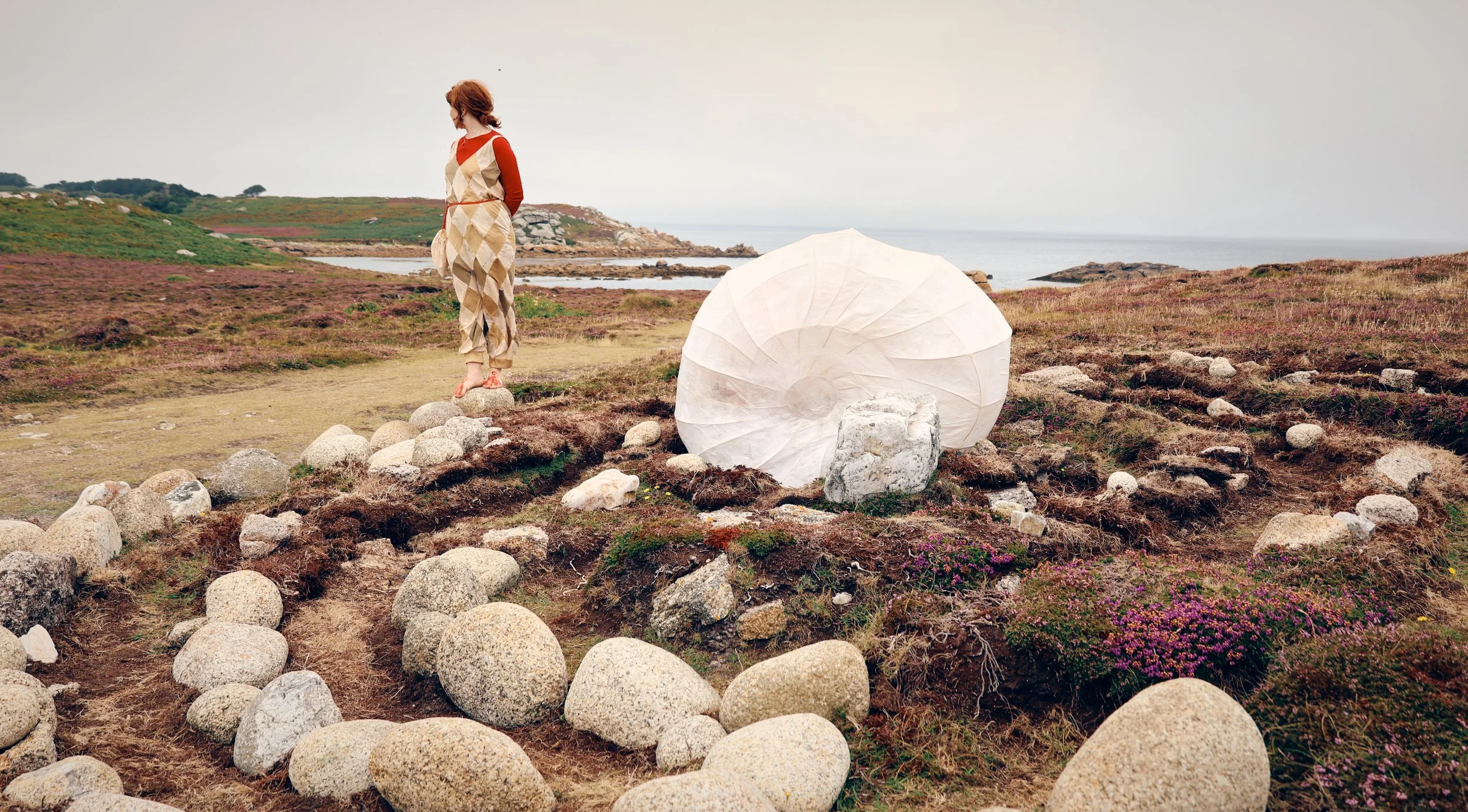
The Biggal-Fool and the Bullhorn await the arrival of the procession at Giant’s Castle Maze…
To inspire our labyrinthine mummers’ play, we looked to the most famous labyrinth myth in the world - Theseus and the Minotaur, which comes from Ancient Crete - and considered what a Scillonian version of that story might look like. We then made costumes and planned a wordless performance, to enact our own version of the story. The faux-mythic play we created incorporated the physical location of the maze beside the Iron Age cliff castle, and what the presence of this defensive fortress might mean; the size and character of our islands, compared to Ancient Crete, and the size of our mazes too; clues in the Cornish language and place names of Scilly that hint at earlier beliefs and superstitions; and performance dynamics that exist in similar revived folk festivals in nearby West Penwith.
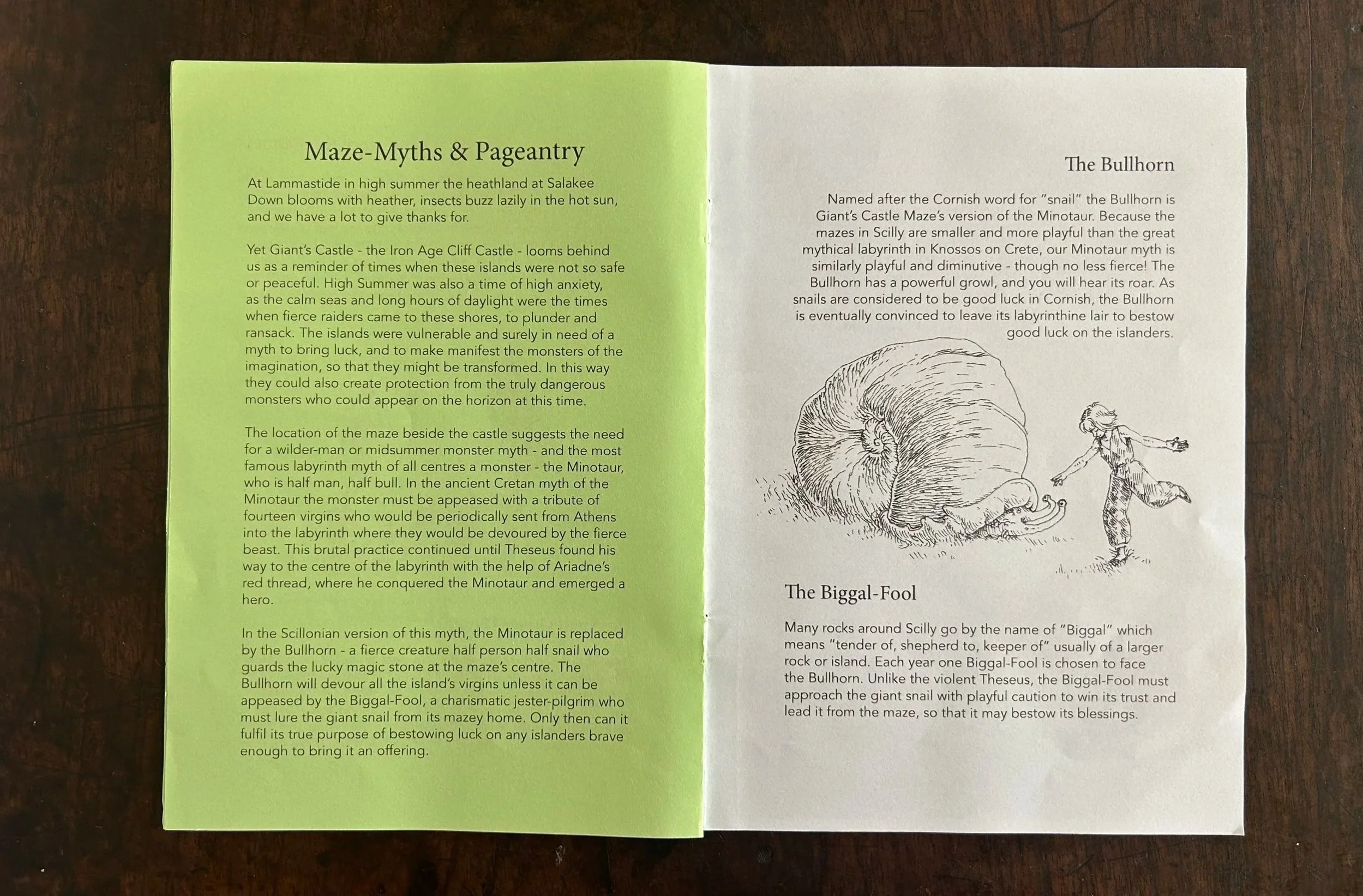
Our programme of the day describing the Maze Myths and Pageantry of the mummers’ play - transcribed below…
“At Lammastide in high summer the heathland at Salakee Down blooms with heather, insects buzz lazily in the hot sun, and we have a lot to give thanks for.
Yet Giant's Castle - the Iron Age Cliff Castle - looms behind us as a reminder of times when these islands were not so safe or peaceful. High Summer was also a time of high anxiety, as the calm seas and long hours of daylight were the times when fierce raiders came to these shores, to plunder and ransack. The islands were vulnerable and surely in need of a myth to bring luck, and to make manifest the monsters of the imagination, so that they might be transformed. In this way they could also create protection from the truly dangerous monsters who could appear on the horizon at this time.
The location of the maze beside the castle suggests the need for a wilder-mann or midsummer monster myth - and the most famous labyrinth myth of all centres a monster - the Minotaur, who is half man, half bull. In the ancient Cretan myth of the Minotaur the monster must be appeased with a tribute of fourteen virgins who would be periodically sent from Athens into the labyrinth, where they would be devoured by the fierce beast. This brutal practice continued until Theseus found his way to the centre of the labyrinth with the help of Ariadne's red thread, where he conquered the Minotaur and emerged a hero.
In the Scillonian version of this myth, the Minotaur is replaced by the Bullhorn - a fierce creature half person half snail who guards the lucky magic stone at the maze's centre. The Bullhorn will devour all the island's virgins unless it can be appeased by the Biggal-Fool, a charismatic jester-pilgrim who must lure the giant snail from its mazey home. Only then can it fulfil its true purpose of bestowing luck on any islanders brave enough to bring it an offering.”
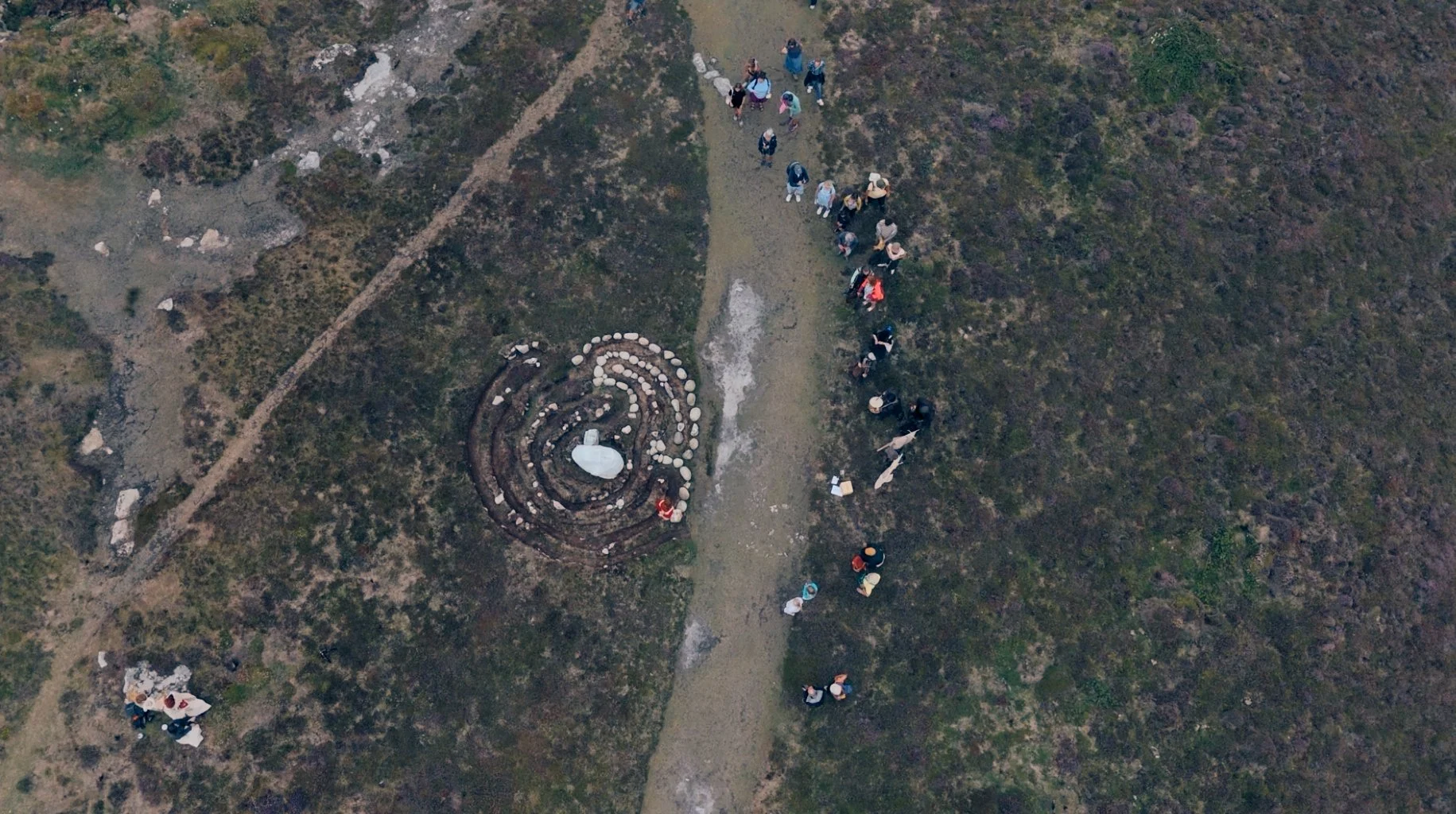
The procession arrived at Giant’s Castle Maze and are met by the Biggal-Fool character…
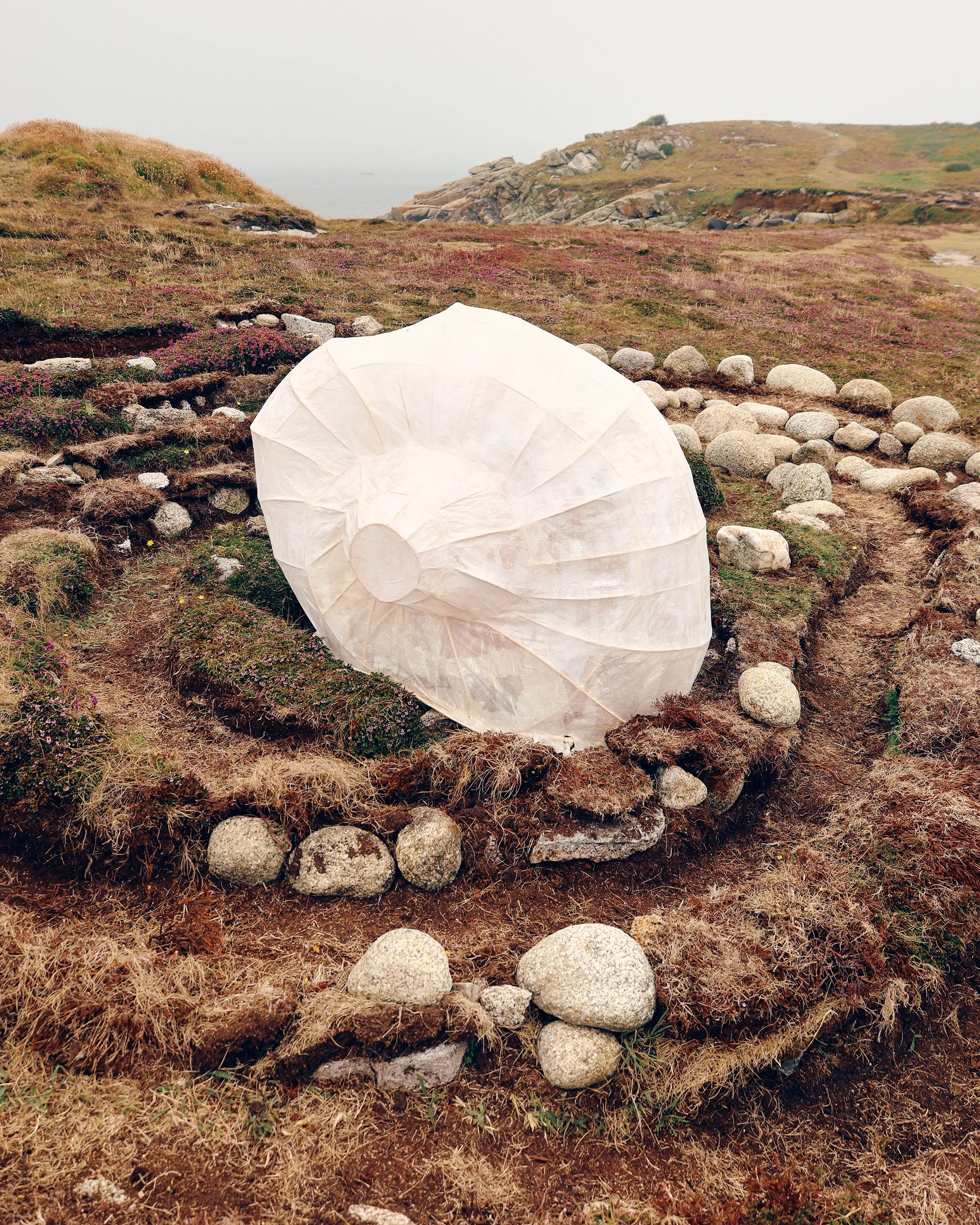
The Bullhorn - a giant snail - lurks in the centre of the labyrinth…
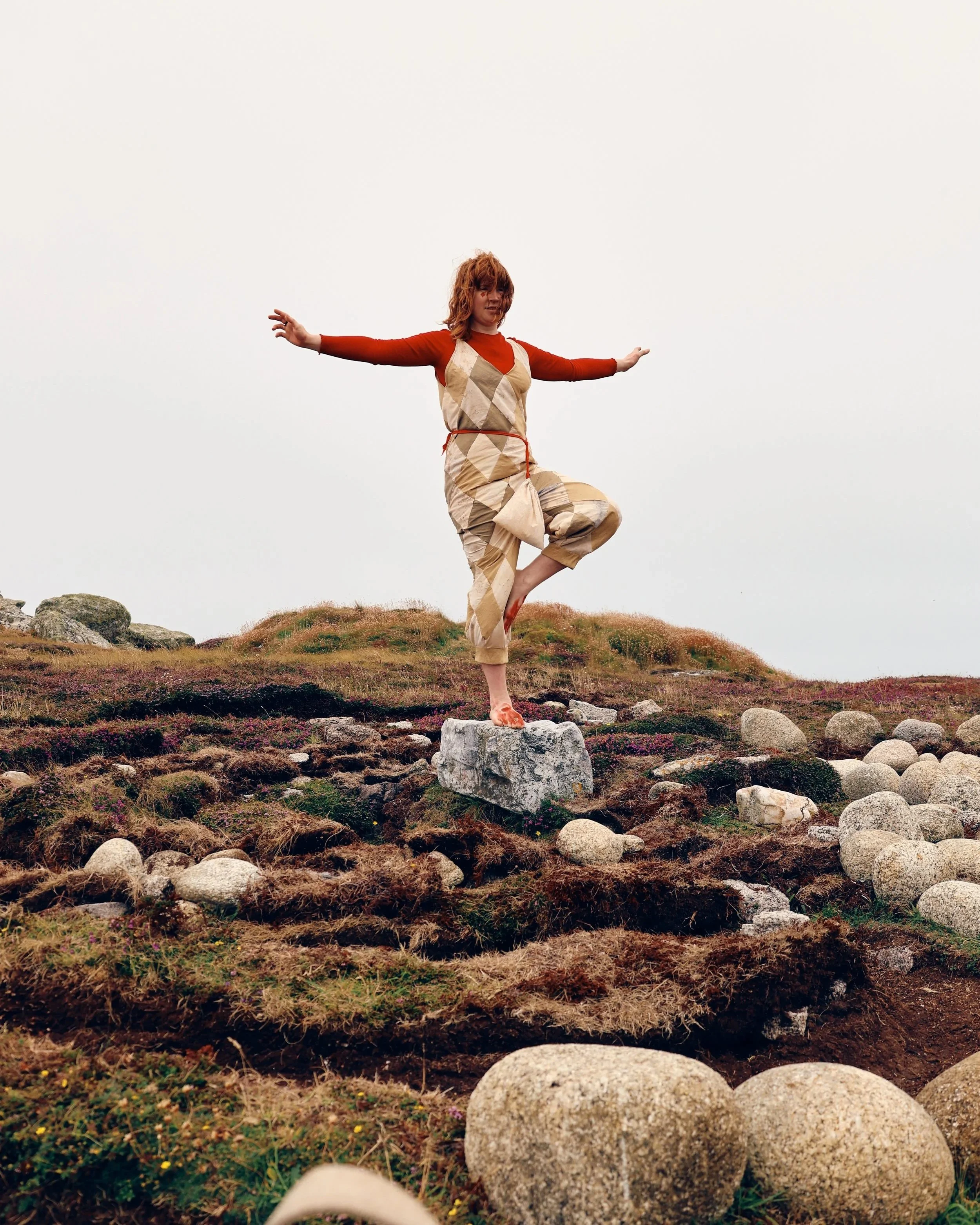
Artist Skye Turner embodies The Biggal-Fool at Giant’s Castle Maze…
Our play centred around two supernatural figures: a monstrous snail named The Bullhorn and a jester-pilgrim named The Biggal-Fool, who both incarnate at high summer, when the days are hot and calm, the threat from the seas would have been felt most acutely, and so also the need for magical protection. Our programme described these two characters:
“Named after the Cornish word for "snail" the Bullhorn is Giant's Castle Maze's version of the Minotaur. Because the mazes in Scilly are smaller and more playful than the great mythical labyrinth in Knossos on Crete, our Minotaur myth is similarly playful and diminutive - though no less fierce! The Bullhorn has a powerful growl, and you will hear its roar. As snails are considered to be good luck in Cornish, the Bullhorn is eventually convinced to leave its labyrinthine lair to bestow good luck on the islanders.
Many rocks around Scilly go by the name of "Biggal" which means "tender of, shepherd to, keeper of" usually of a larger rock or island. Each year one Biggal-Fool is chosen to face the Bullhorn. Unlike the violent Theseus, the Biggal-Fool must approach the giant snail with playful caution to win its trust and lead it from the maze, so that it may bestow its blessings.”
The Bullhorn fiercely guards the centre of the labyrinth as The Biggal-Fool cautiously approaches through the winding coils. In Cornish mythology, snails are attributed with many of the same qualities that bulls are honoured with in Cretan culture - both are potent symbols of fecundity and wild power, and are associated with good fortune. If the jester can reach the snail and tame it out of its shell - before being eaten - the beast can be coaxed from the maze and persuaded to bestow its blessings on those in attendance.
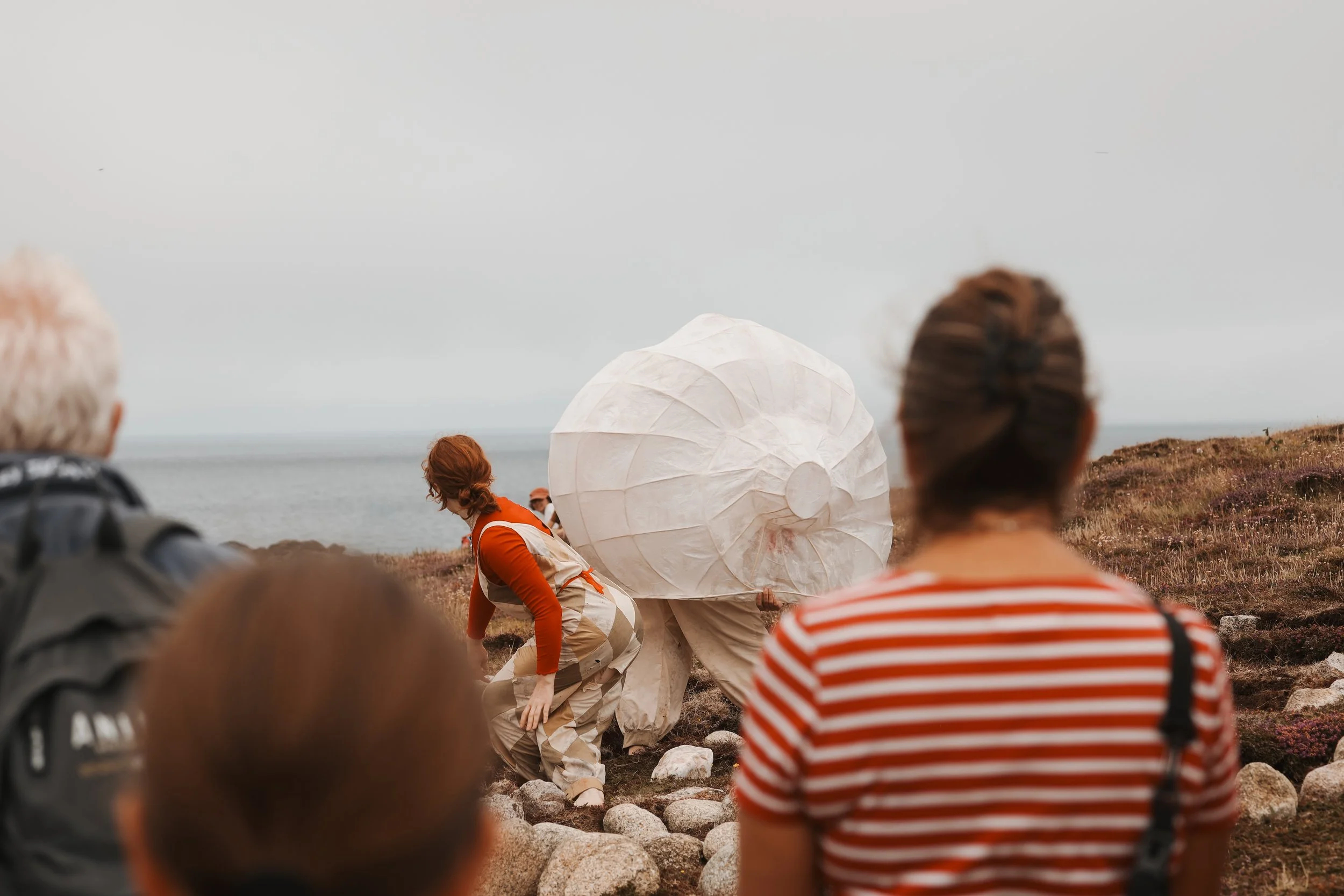
The Biggal-Fool tries a sneak attack on the roaring Bullhorn…
“The shells of snails are favoured also, not only for their protective shell, but for their traditional associations in the West Country with power - sexual force, fertility, fecundity and creation. Also here are the creatures credited with the ability to bestow blessings upon places and people, thus are their shells gathered to fashion charms to bring protection, potency, passion and good fortune upon the home and life endeavours of their keeper.”
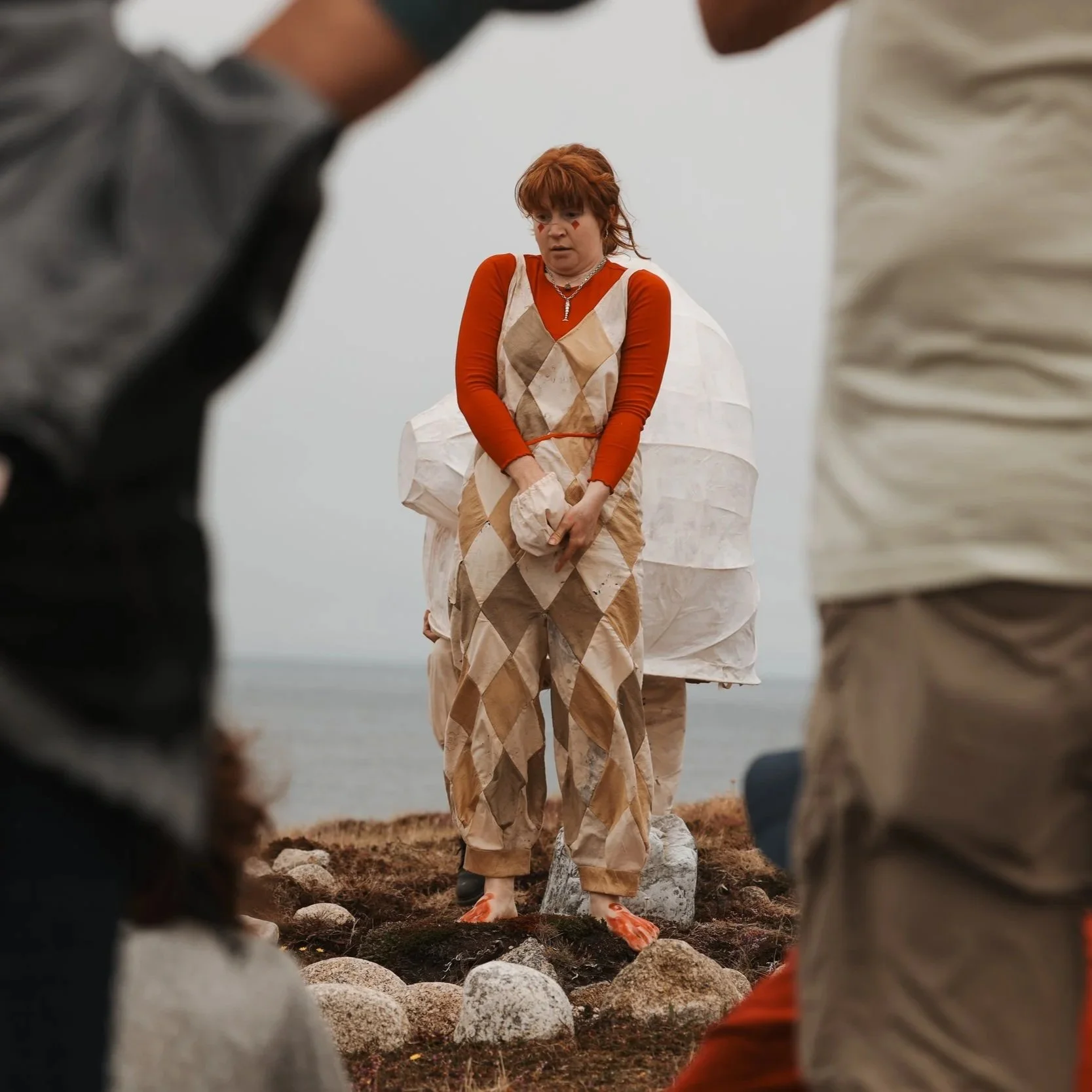
The Biggal-Fool reaches into their pouch of enchanted gorse petals…
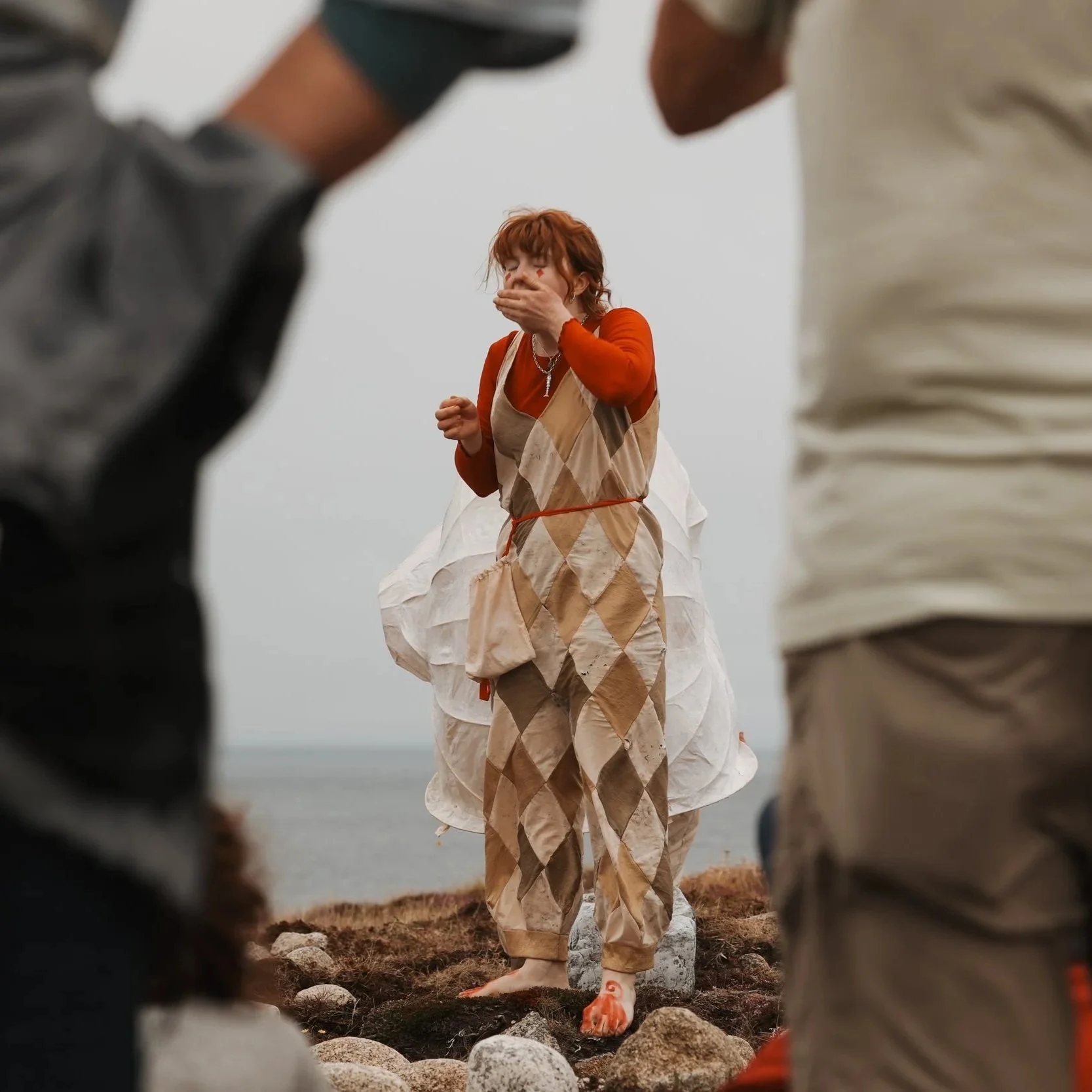
…and snacks on some for courage!
The Biggal-Fool attempts to bewitch the Bullhorn by casting fistfuls of magical dwarf furze of “cornish-fuzz” gorse (Ulex gallii) over the beast. But this spell has little effect on the Bullhorn’s magical shell.
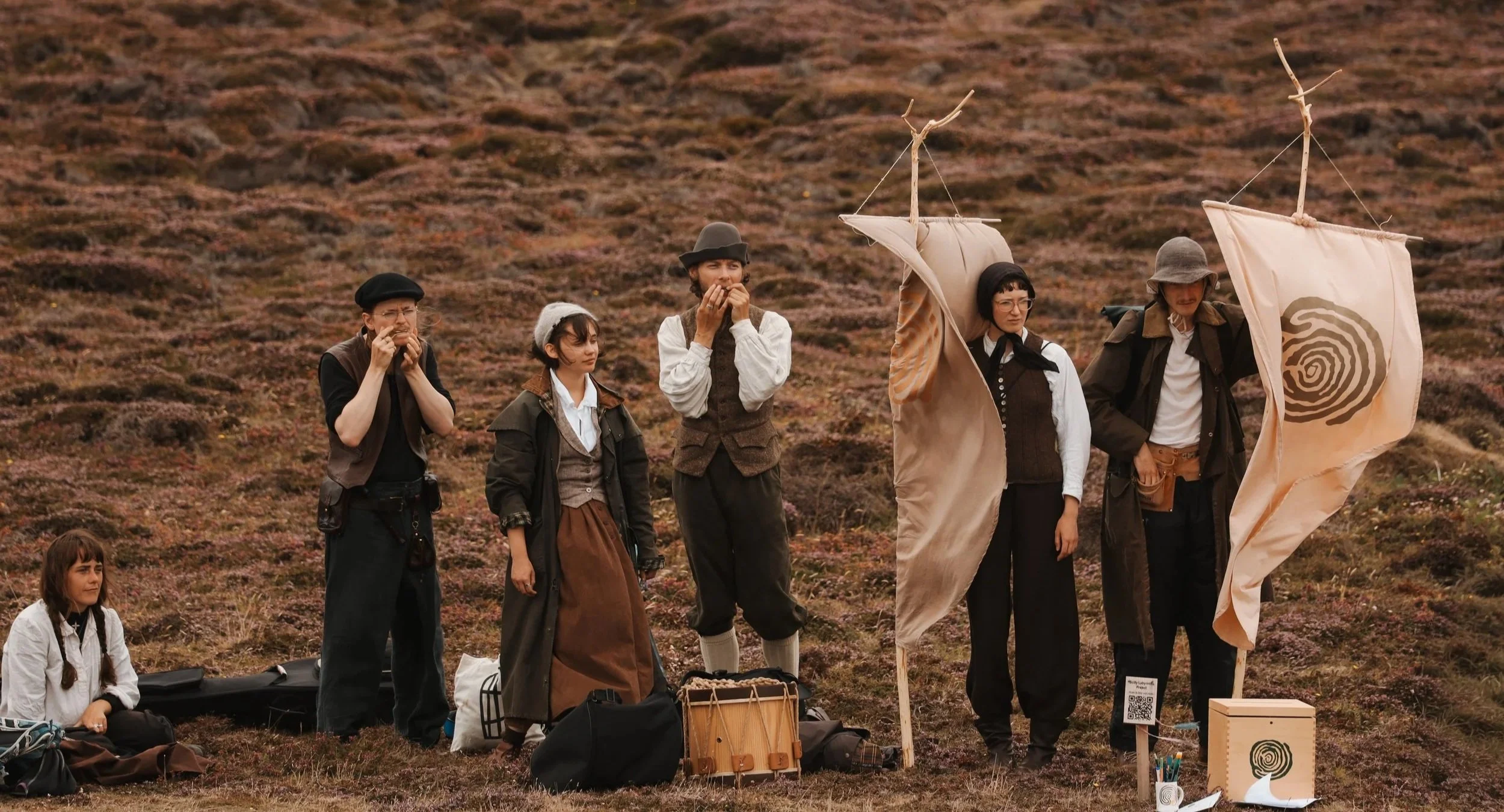
Gobin Band provide the accompaniment to the mummers’ play with twanging and boinging jaw harps. These ancient instruments are thought to originate from Neolithic China, and were a popular instrument across all social classes in Medieval Europe. Their sound - both ancient and strange - was the perfect compliment to the silent mummers’ play, something that felt ancient, uncanny and irreverent all at once.
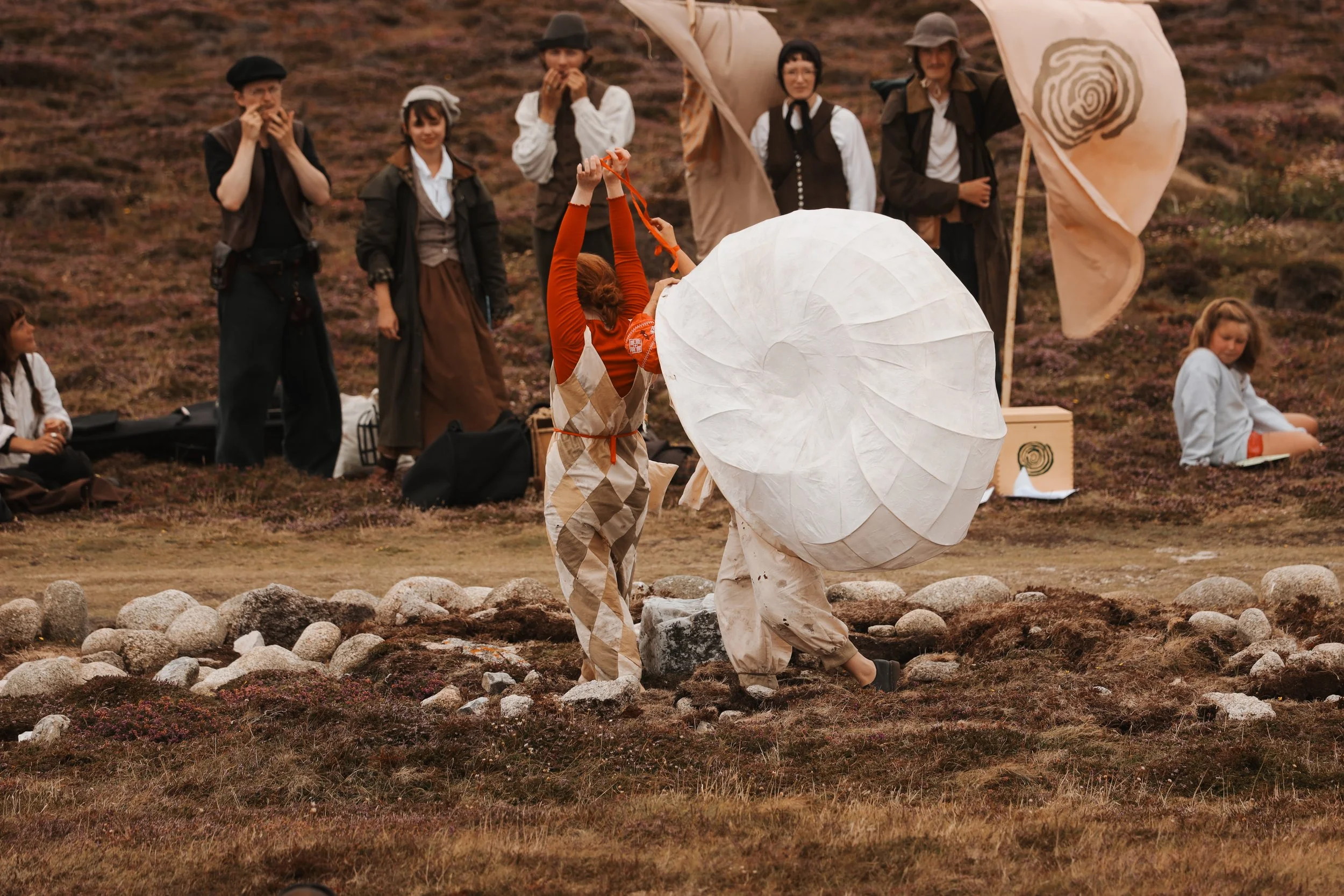
The Biggal-Fool succeeds in taming the Bullhorn and leads the monster out through the labyrinth’s curves, a red-tread tied around its wrist in homage to Ariadne’s red thread, which Theseus follows through the Cretan labyrinth to safety. Now the Biggal-Fool adopts the role of a “teaser” - a liminal figure in Cornish folk practices, believed to originate from Padstow’s ancient May Day tradition, who accompanies the many “osses” through the various folk festivals throughout the Cornish year. The traditional Cornish “oss” - an uncanny, almost monstrous interpretation of a horse, but highly stylised (in the case of the Padstow originals), or otherwise depicted as a stallion-skull creature (similar to the Welsh Mari Lwyd) - is named “obby oss” or “hobby horse.” The teaser is an escort and companion to the oss, who acts as a mediator between the supernatural creature and the audience.
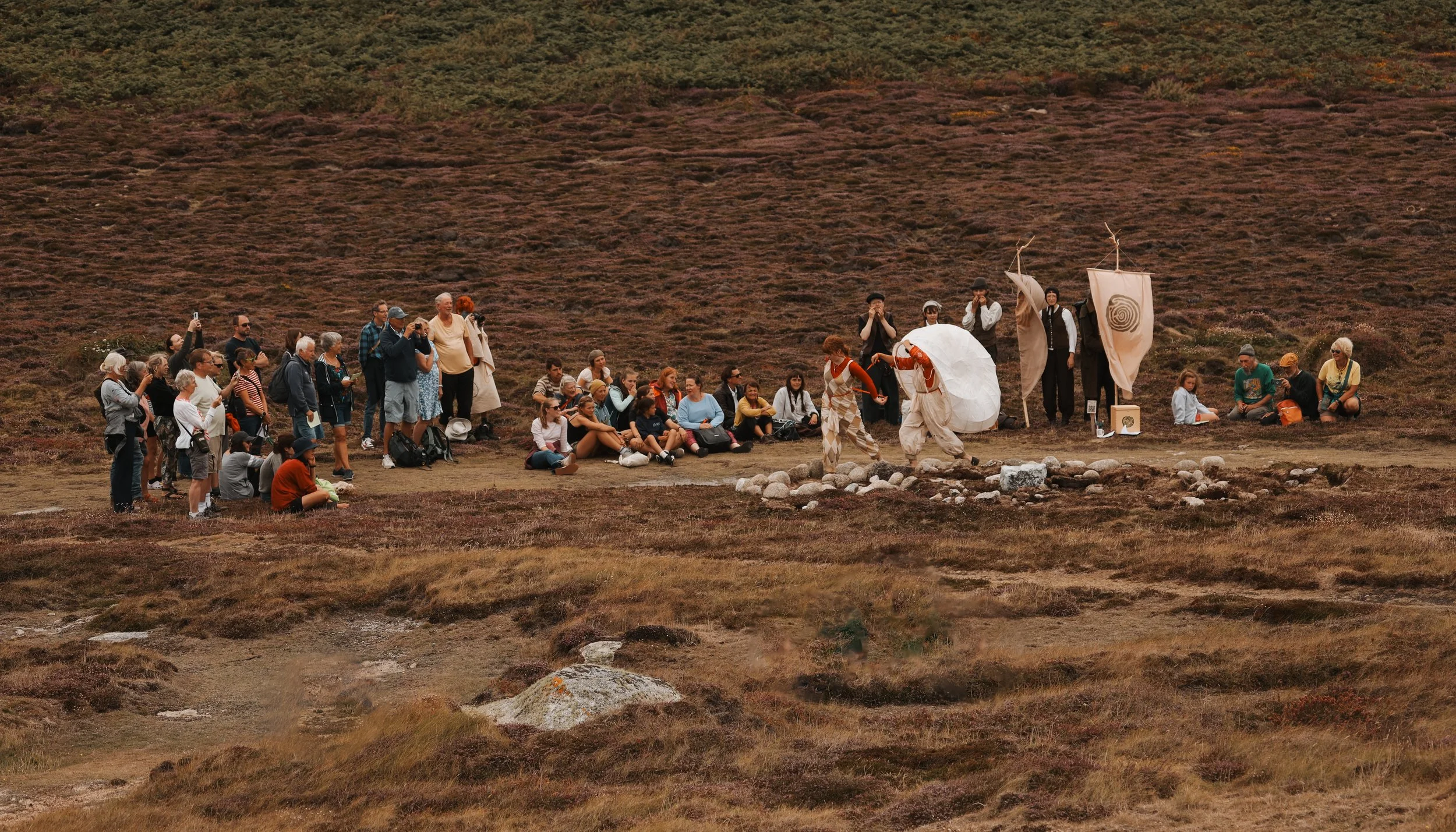
The teaser-fool leads the oss-like snail out around the labyrinth’s twisting paths...
“The role of the teaser is to help guide the oss through the crowd… If people ask I say I’m a bridge person between the oss and the crowd and in that sense I’m a liminal figure, so it makes sense to cross-dress to accentuate that. Yes I am female, but I dress like a male: like a groom in a top hat.”
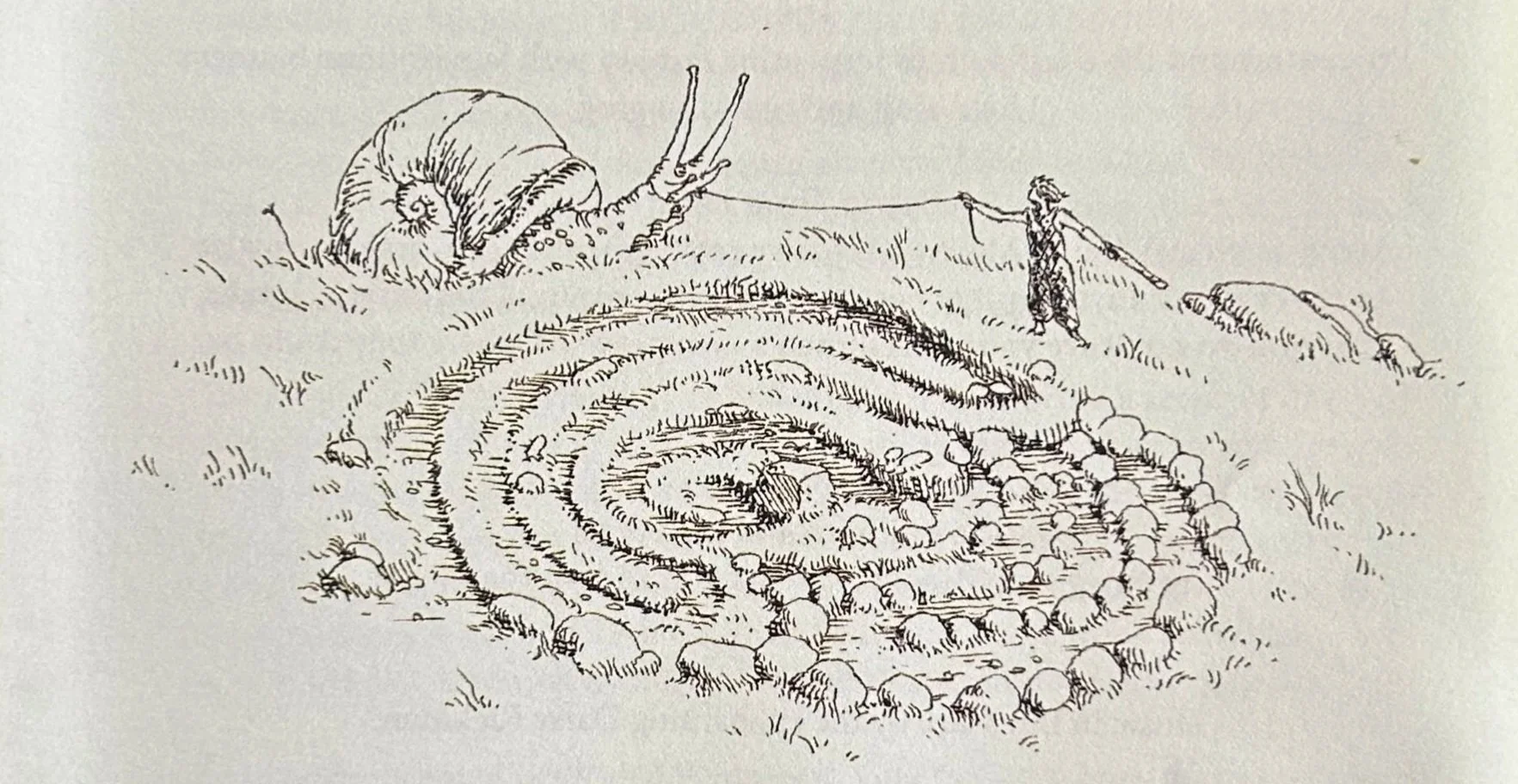
An illustration of the Biggal-Fool leading the Bullhorn out of Giant’s Castle Maze, by Layan Harman…
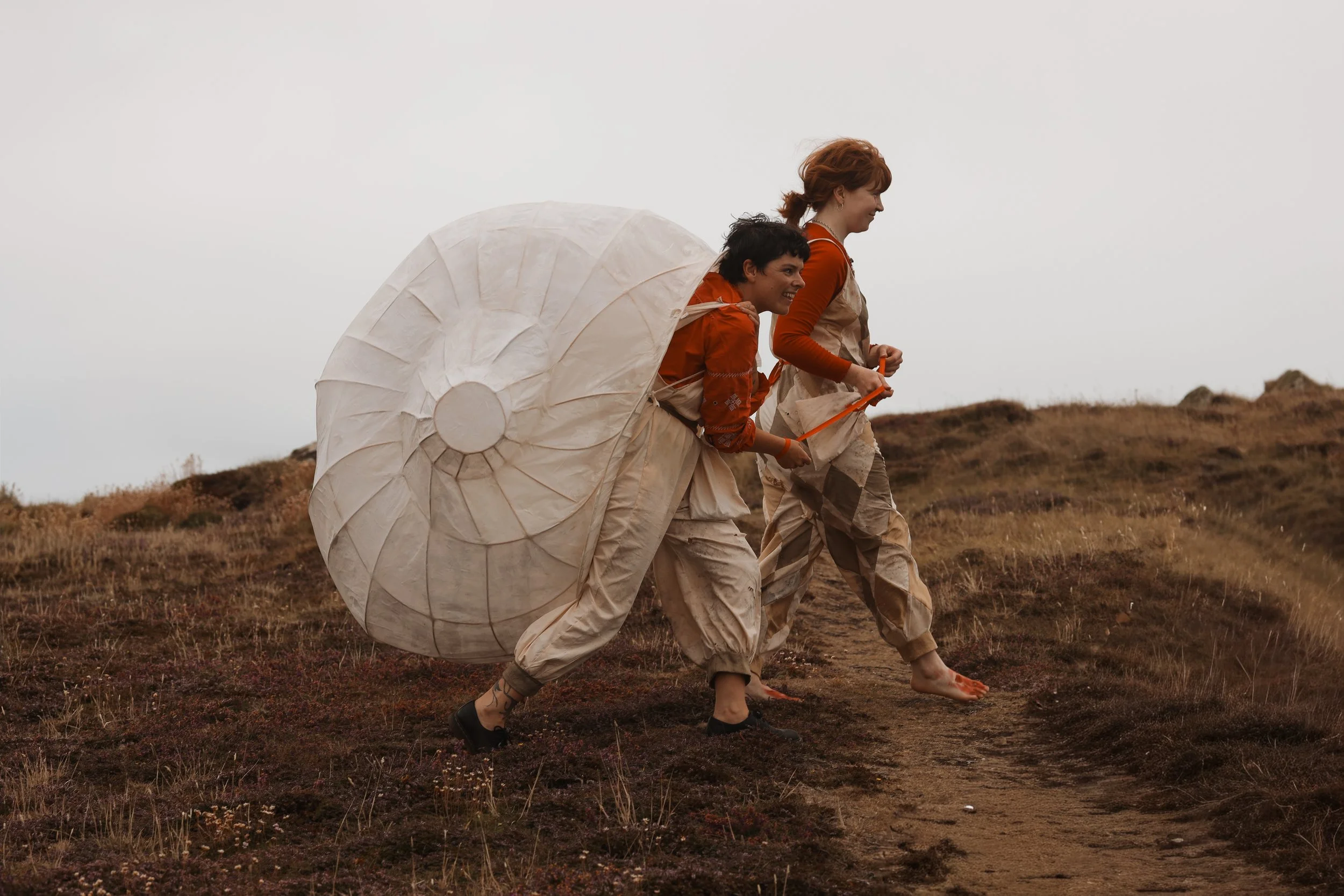
The Bullhorn is led to meet the audience of the mummers’ play…
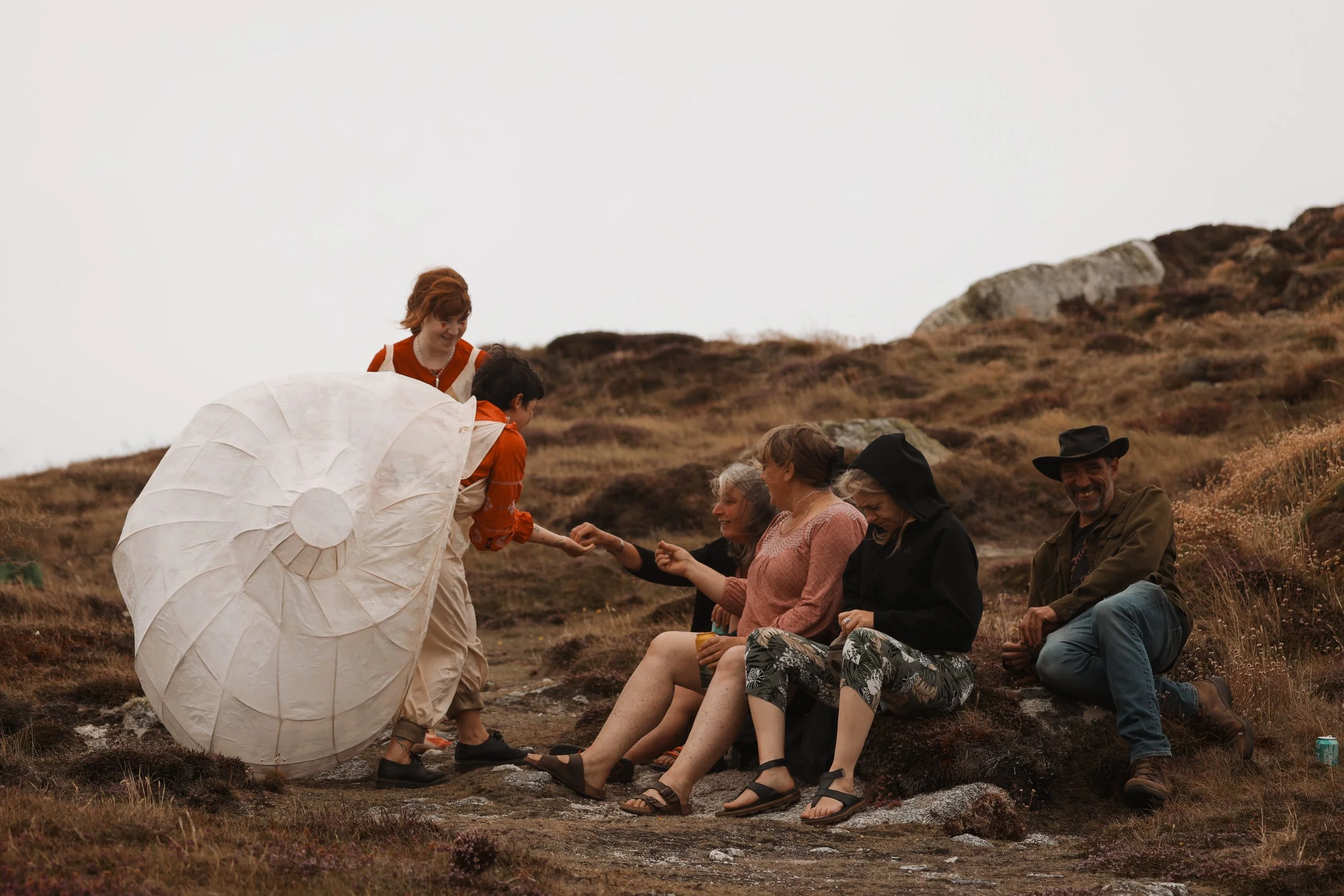
The audience give The Bullhorn shells in exchange for good luck…
At the beginning of the procession, before leaving Old Town, each participant was given a Scillonian sea shell to take with them to Giant’s Castle Maze, though they were not told why. These spiralling shells - mimicking the paths of the labyrinth and the coils of The Bullhorn’s shell - were intended to be given as offerings for The Bullhorn. This practice makes reference to the “snail shell charms of blessing” noted by Gemma Gary in The Black Toad: West Country Witchcraft and Magic (2012) where she describes how “the sensual snail has long been held to be a creature of fecund, potent, and blessed virtue and their spiral form shells are desired charms.” In return for the shell offerings, which it stowed in its pouch, The Bullhorn offered spirallic blessings to each participant. The gesture of offering The Bullhorn a tribute in order to ascertain its blessings for the year, echos the Cornish practice of making offerings to snails, as they were understood as the bringers of good luck.
“Snails were held in certain esteem by miners, who offered a snail a drop of melted tallow from their candles or a crumb of pasty or fuggan on seeing one on their way to bal (mine) in the morning.”
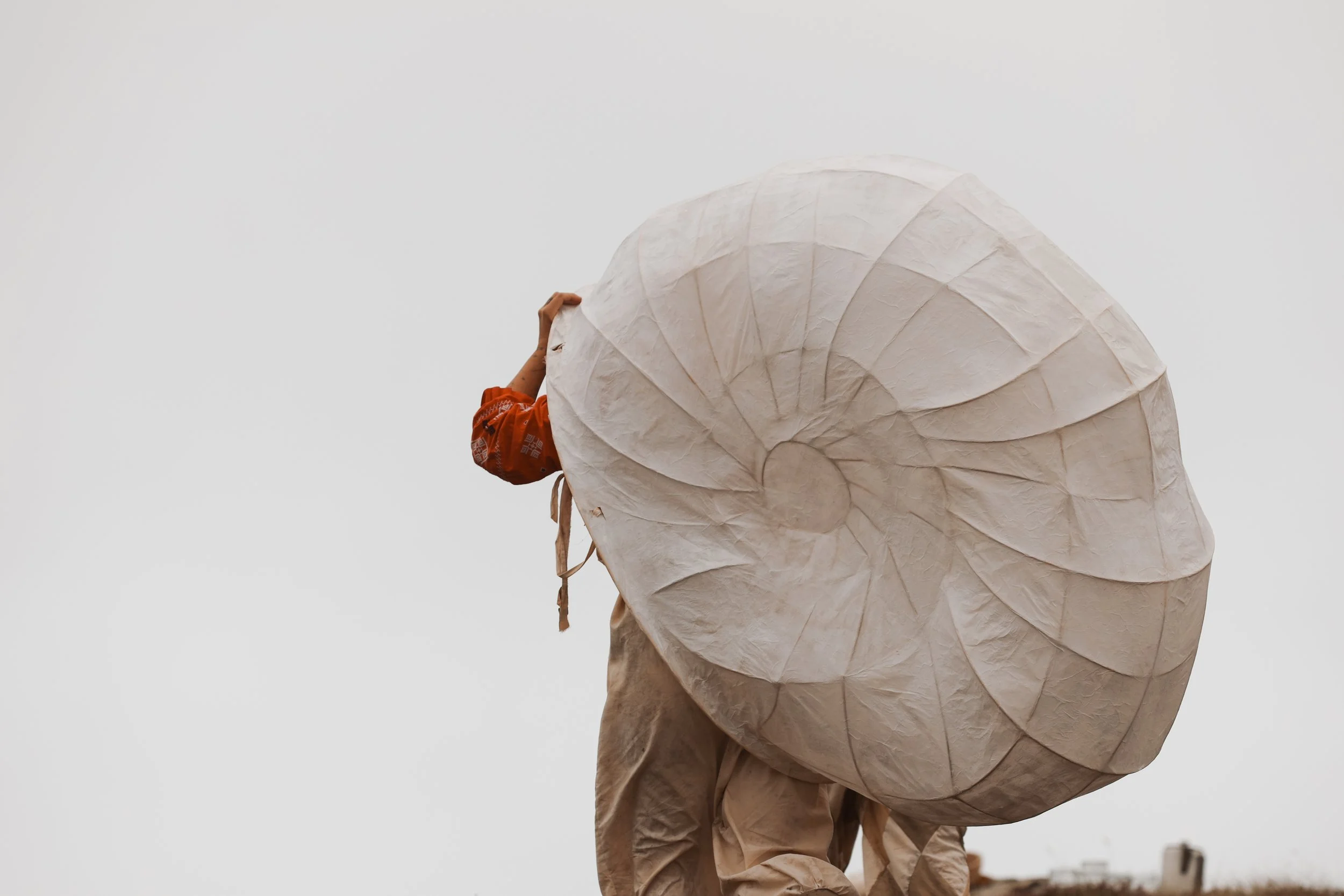
Once they have blessed all in attendance, The Biggal-Fool and The Bullhorn disappear inside the giant snail’s shell for another year…
Once everyone in attendance had received their blessings, The Biggal-Fool joined The Bullhorn and both resceded back inside the giant snail’s shell, concluding this part of the celebration. Music, feasting and further ritual followed, now that the high-summer energies had been made manifest and collectively transformed through ritual theatre. Even though we understand that we invented the whole thing, this mummers’ play did feel truly ritualistic and oddly moving to be part of. And it was only later that we realised how we had unconsciously and intuitively tapped into existing mythology within the Cornish mythic cannon. Despite intuiting this deeper meaning, this is not an ancient myth, but all traditions have to start somewhere, and I feel like now we have an idea of what it may have felt like, centuries ago, for those people who did first create the old (now lost) folk practices that honoured the land and the seasonal changes, and the importance of coming together as a community. We are so starved of this kind of interaction - with the land, the mythic, and each other - in our modern world, but I think we are all craving it, which is likely why this silly play about a fool and a giant snail became something that was genuinely very moving to be part of.
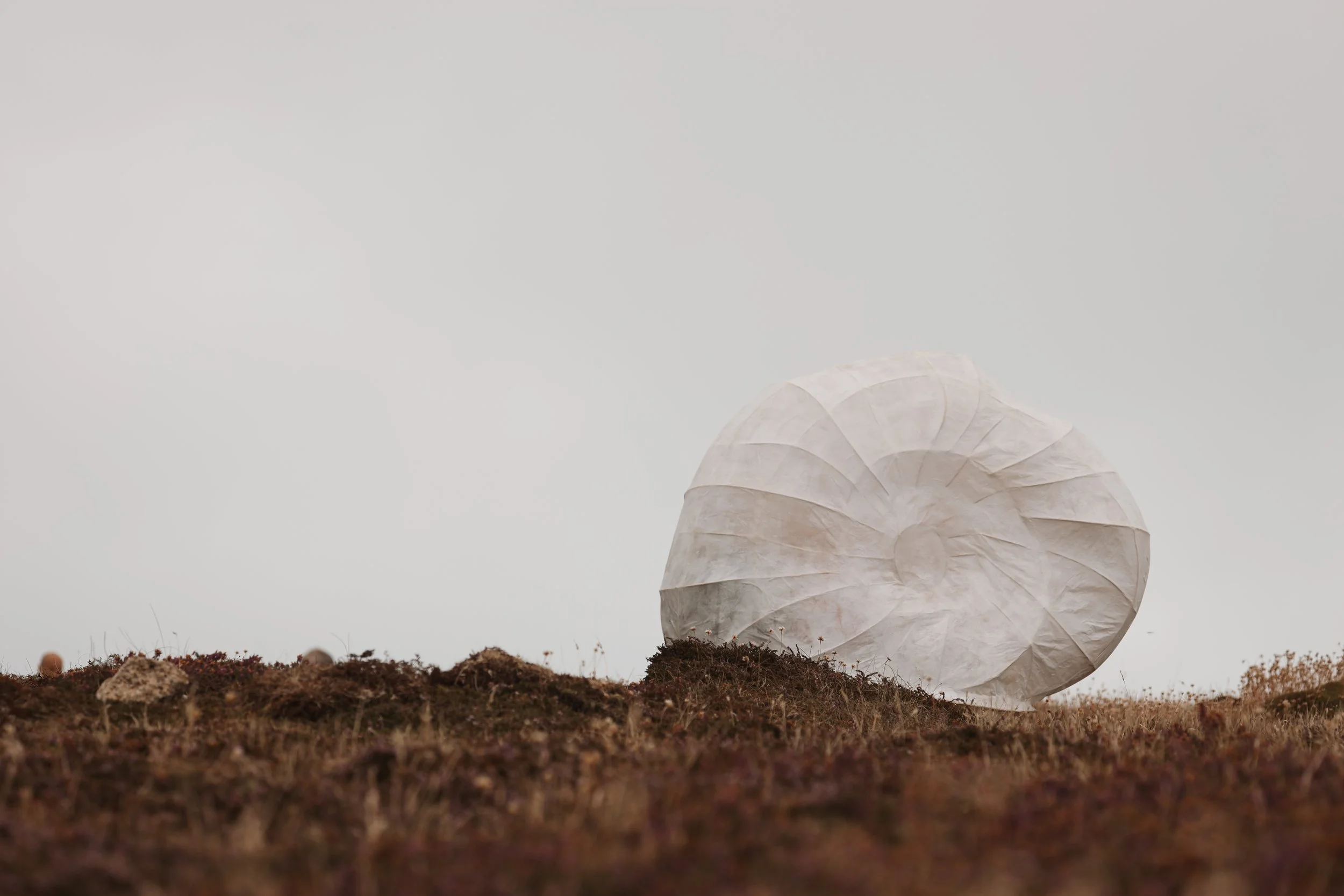
The Bullhorn’s shell rests quietly for another year, now its wild spirit has been honoured and transformed…

After being released from the archetypal grip of their mythic roles, the mummers’ play actors Skye Turner (playing The Biggal-Fool) and Teän Roberts (playing The Bullhorn) can return to their moral lives, until next Lammastide when The Bullhorn and The Biggal Fool may be called to incarnate into this moral realm again…
Thanks to all who came to participate in this pageantry, to Inga Drazniece, Poppy Litchfield and Anaïs Serres for photography, and to Skye Turner for embodying the energy of The Biggal-Fool so perfectly.