Silk Labyrinth Carved Central Stone
“A traditional Cornish witches’ tool useful for inducing trances and the state of Becoming is the Troy Stone; also known as a ‘Mazey Stone’ from the Cornish ‘mazed’ meaning to be of a maddened, en-tranced or intoxicated state. This is traditionally a slab of slate carved with a uni-cursal labyrinth. One method of use is to sit with the stone on the lap, or on a table of comfortable height, in a room lit dimly by a single candle, and to slowly follow the labyrinth’s path repeatedly in and out with the left index finger whilst rocking or swaying gently and humming rhythmically.”
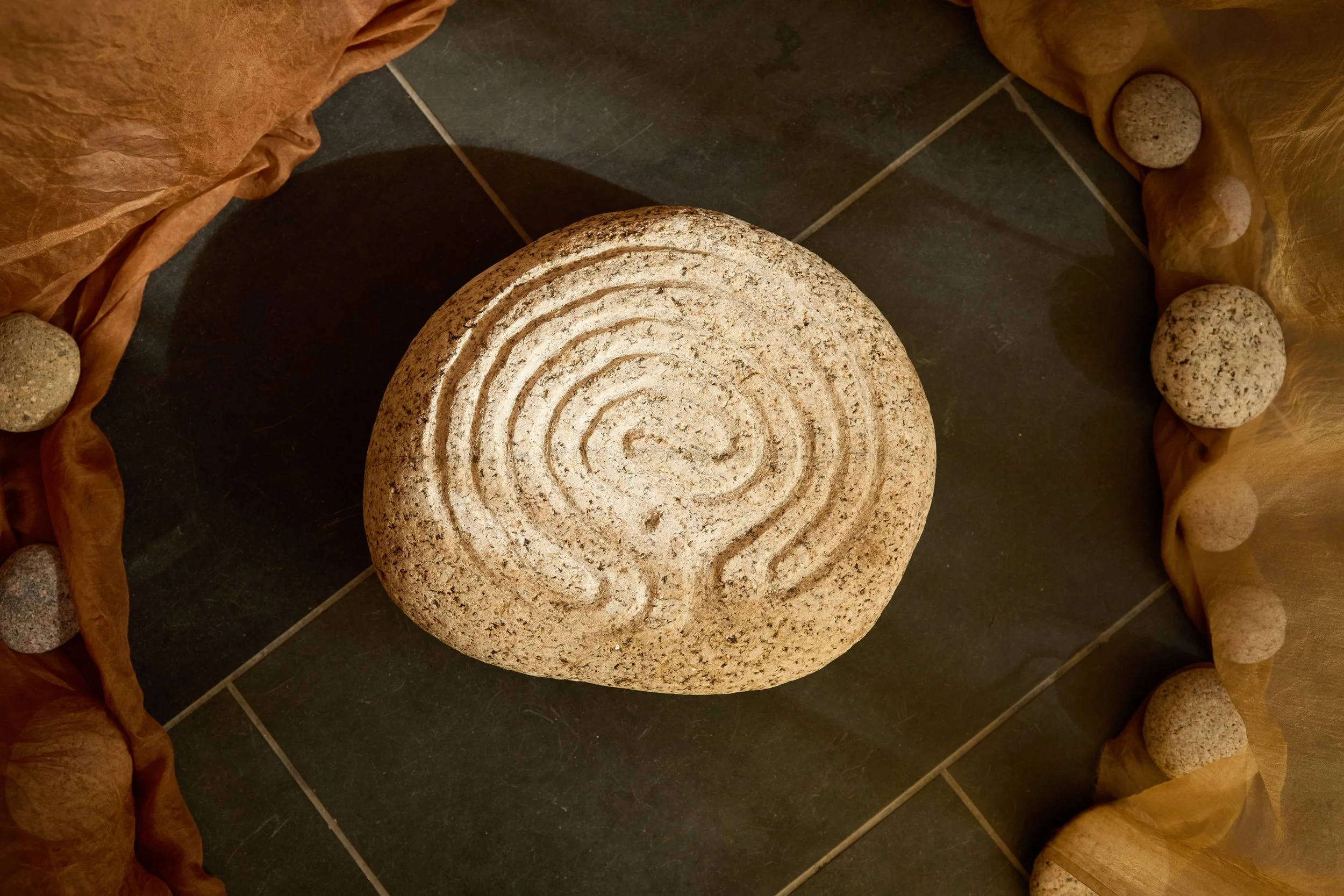
The carved “Troy Stone” at the centre of the Silk Labyrinth…
We had come up with the idea for The Silk Labyrinth - installing a labyrinth of our own so that visitors could have the experience of walking one of Scilly’s mazes inside the exhibition space - but we were puzzled as to what we should put in the centre. Most labyrinths - particularly the pebble mazes in Scilly - just have a space at the end of the path, creating somewhere meditative to reflect, but the space at the centre of ours felt like it needed more. Then we thought of the labyrinth that we restored on St Mary’s - Giant’s Castle Maze - which has a really enigmatic and mysterious large central stone (to find out more about our research into this stone, read this blog post and then this blog post) that has baffled and beguiled us throughout the project, so we thought to place a similarly special stone at the centre of the silk labyrinth. To further embed the heritage and mystery of the local labyrinth tradition - particularly the iconic Troy Town Maze - we decided to make this a into Troy Stone as well.
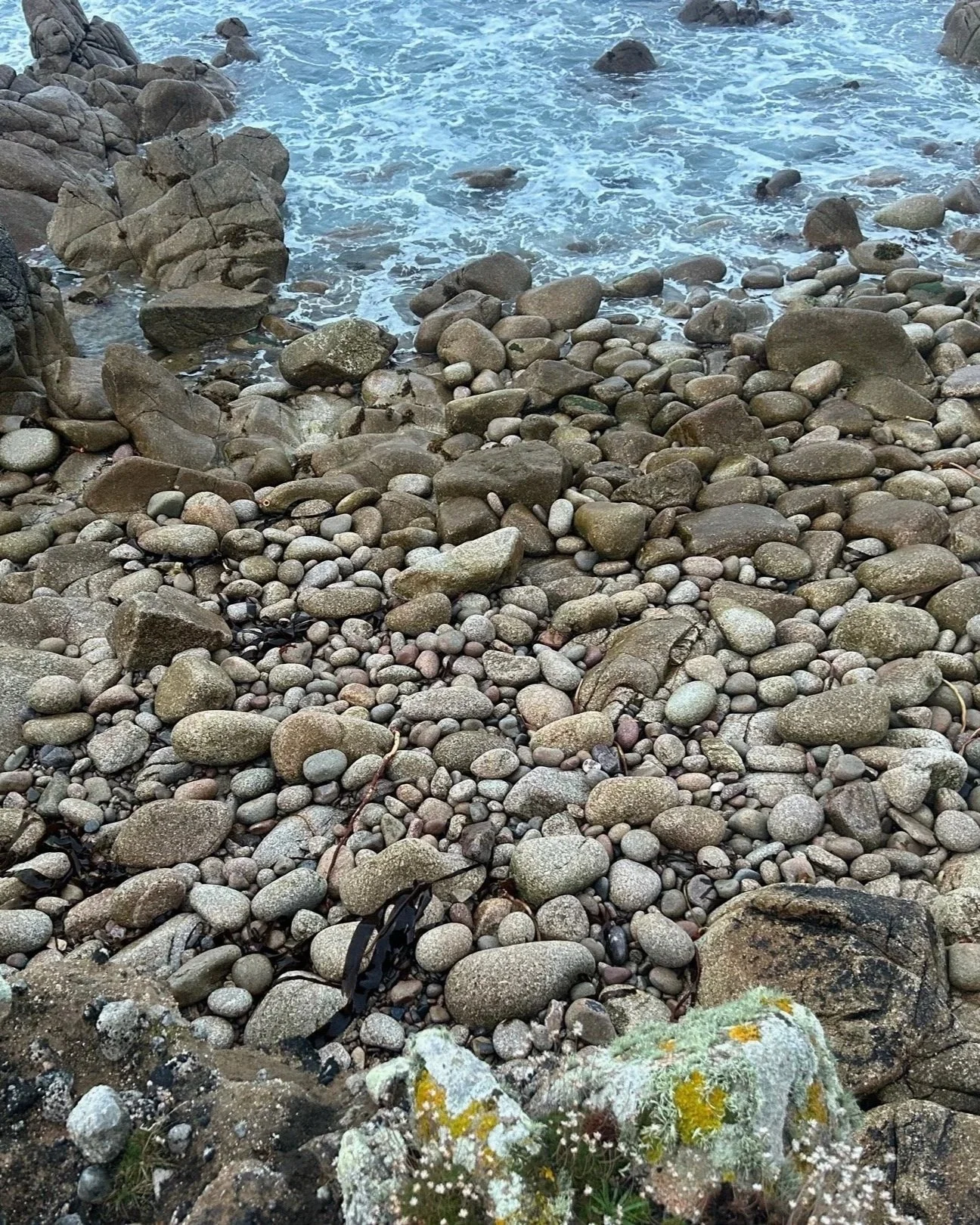
We searched the island for an appropriately sized and shaped pebble…
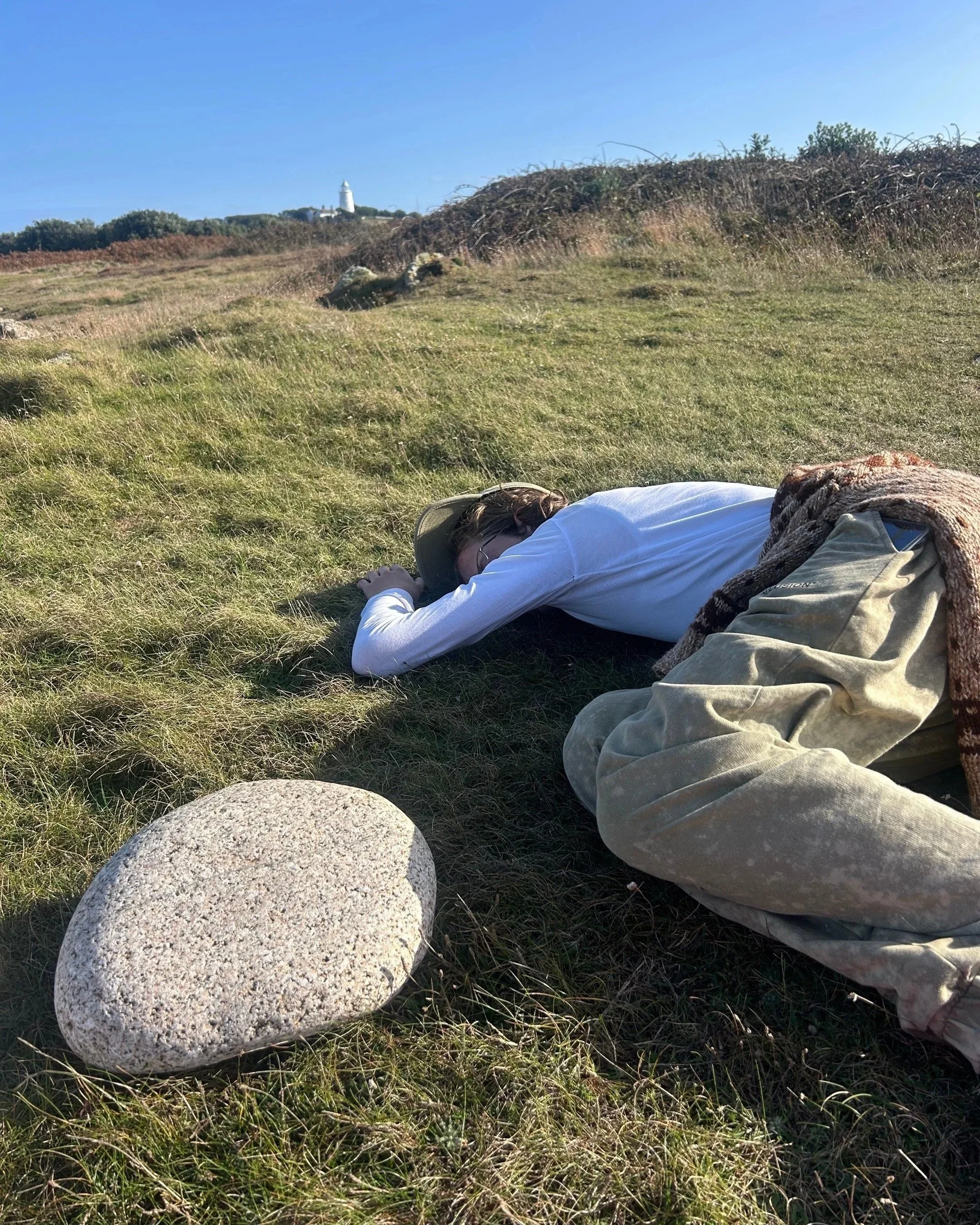
Then the perfect one fell from the sky and knocked Layan out…
Inspired by the labyrinths carved into the side of a rock face at Rocky Valley near Tintagel, and by the Troy Stones in the Museum of Witchcraft and Magic in nearby Boscastle, we created our own granite version on a large, sea-smoothed pebble from St Agnes. Layan knapped the path into the stone in the shape of the current form of Troy Town Maze, which we confirmed with our aerial photographs of the site earlier in the summer. In this way the maze made of pebbles inverted to become the maze on a pebble.
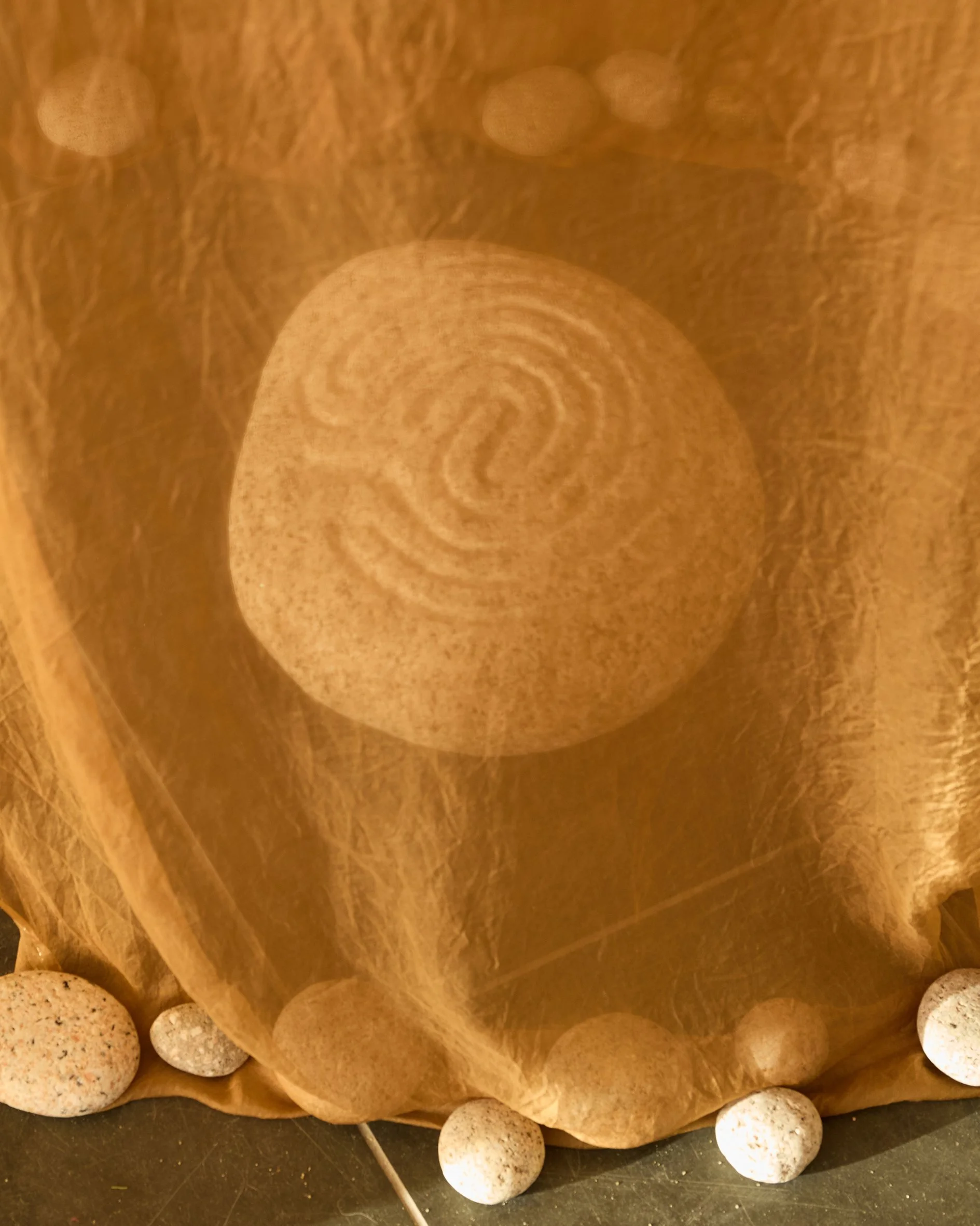
Approaching the central carved stone - glimpsed through the silk panels…
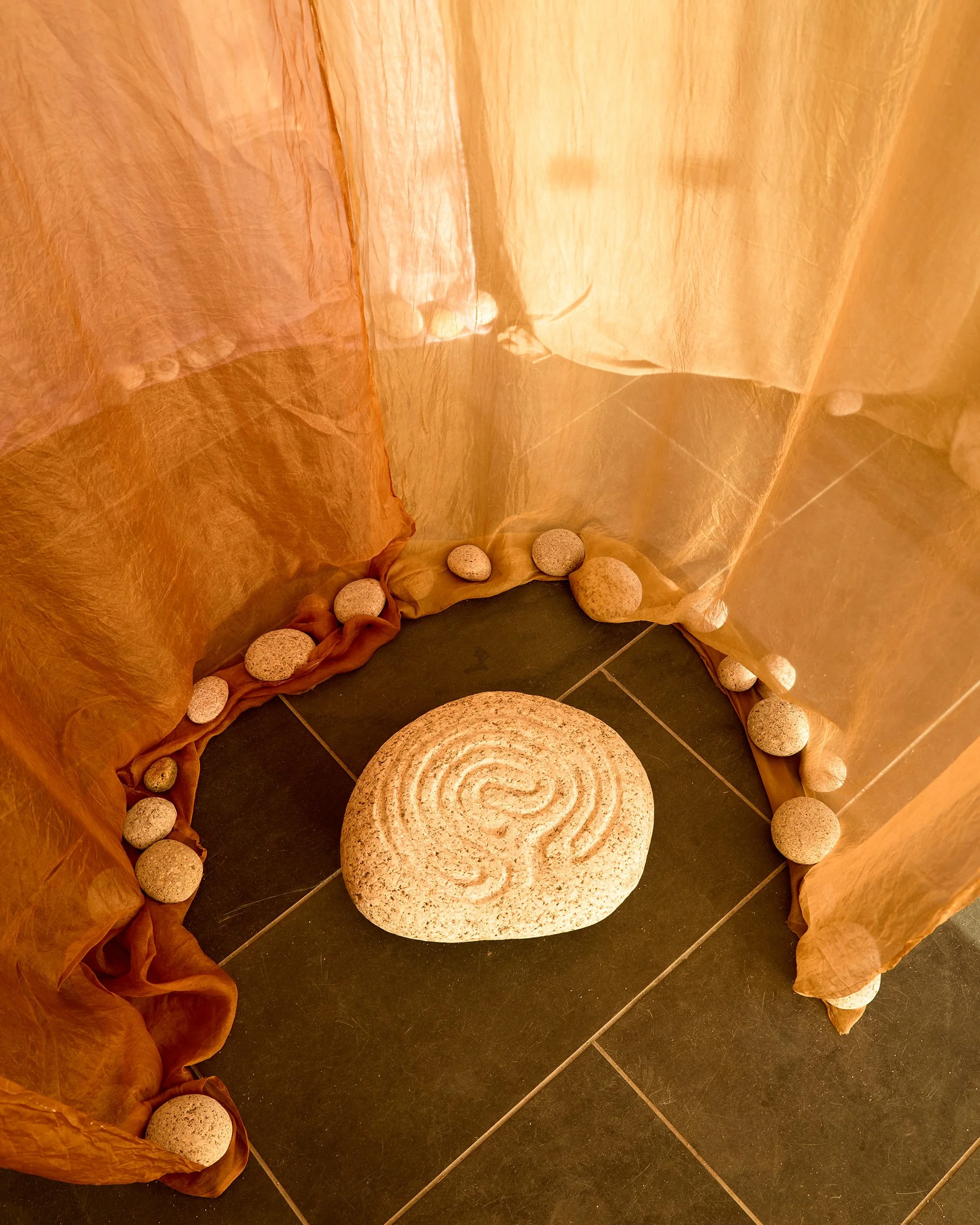
The central stone becomes visible through an opening in the layers of silk…
As you walked between the semi-transparent silk panels of the artwork, the stone at the centre became slowly more visible, in an experience similar to using a Troy Stone for “entering the state of Becoming” or undertaking a “journey into the Other World.” Labyrinth walking is also often considered to be a similarly meditative experience, with the winding paths bringing a person towards the centre, and we wanted this trance-inducing symbolism to pervade the whole of this installation.
“Entrance to the Other World? The labyrinth has always been associated with Mother Earth and the entrance to her underworld. Notice the shape of the entrance to a labyrinth and its womb-like centre. Slowly walking, or finger-walking, a labyrinth can induce a trance-like state (en-trance) suitable for the journey into the ‘Other World’. With a uni-cursal (one way) labyrinth one can’t get lost - start at the bottom and slowly follow the raised path, you will be moving deosil (sunwise) as often as you are moving widdershins (anti-sun wise). Eventually you will arrive, well balanced, at the sacred centre of the symbol and maybe of another world.”
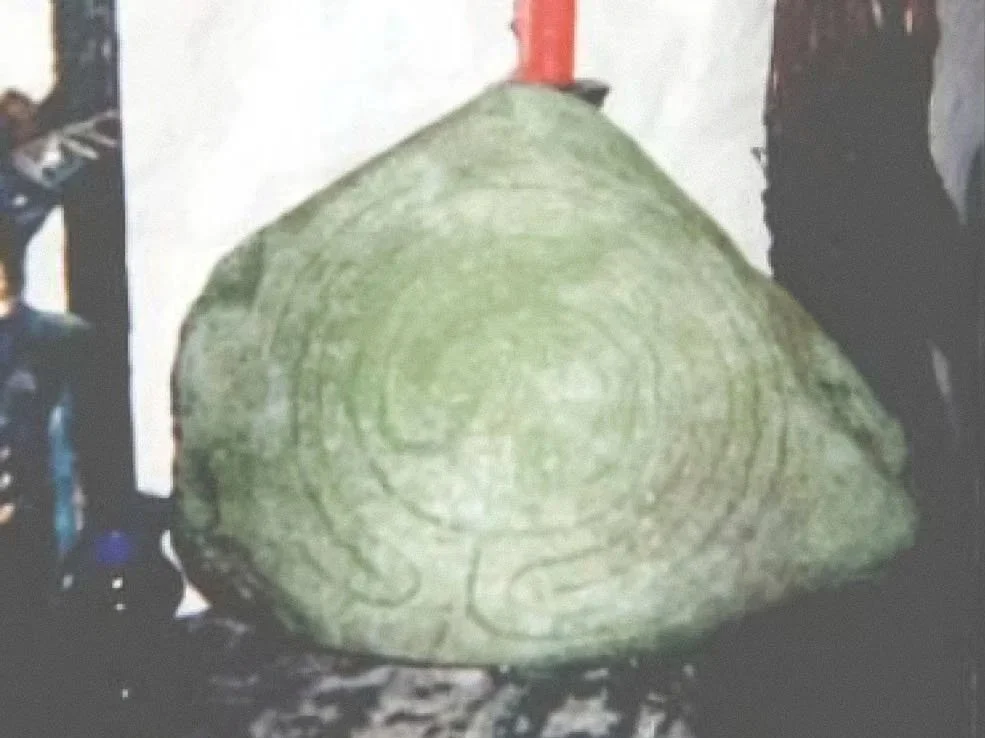
A photograph of a Troy Stone from The Museum of Witchcraft and Magic’s archive. The labyrinth stone in this photograph was made by a Cornish witch and was used before scrying.
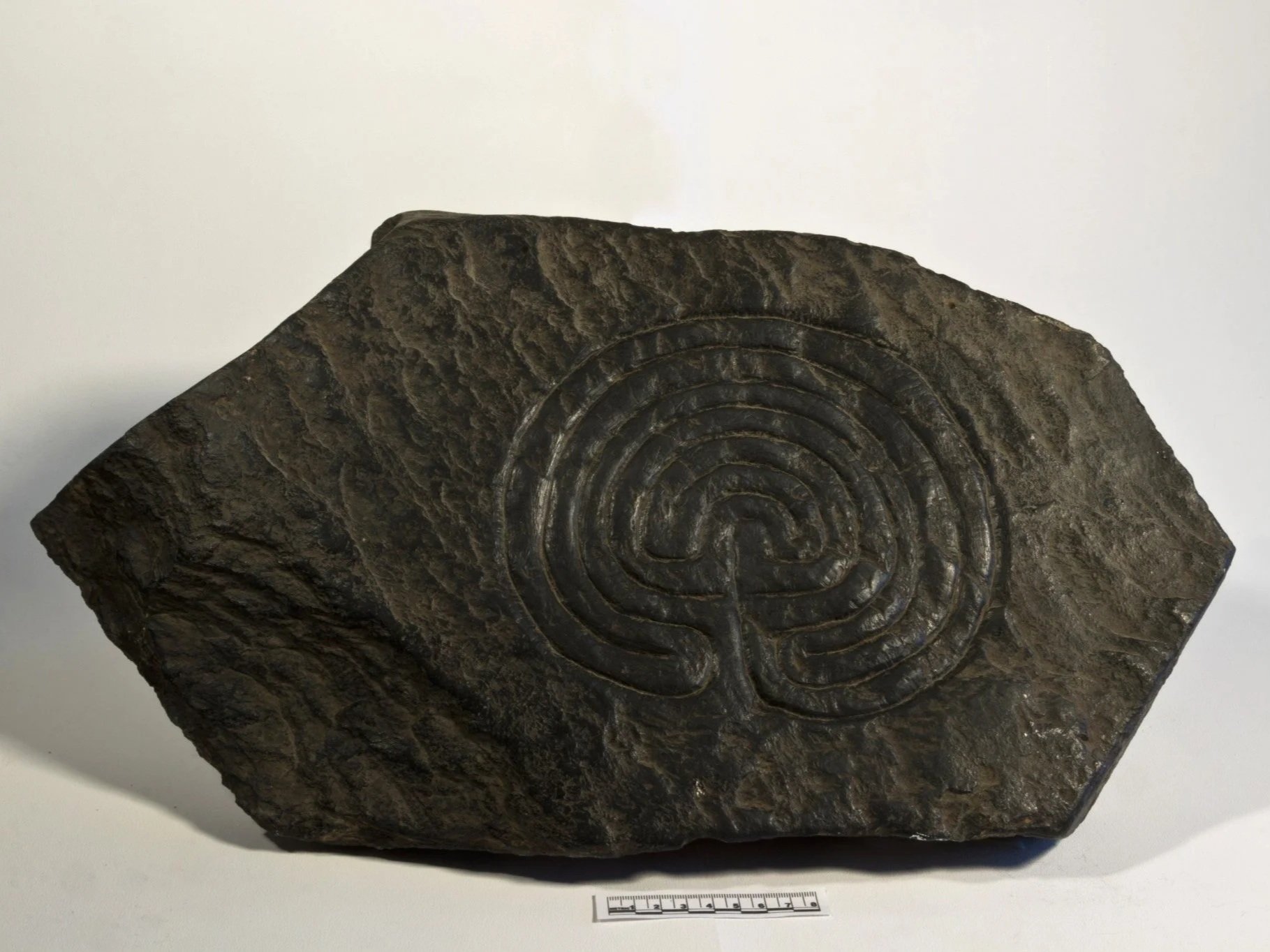
An example of a Troy Stone on display at The Museum of Witchcraft and Magic, which came from a farm at Michaelstow.
“The riddle of the maze stones - well may the witch ponder the problem. To get a reading from them is like working the tarot cards - but once you master the system you treat them with respect.”
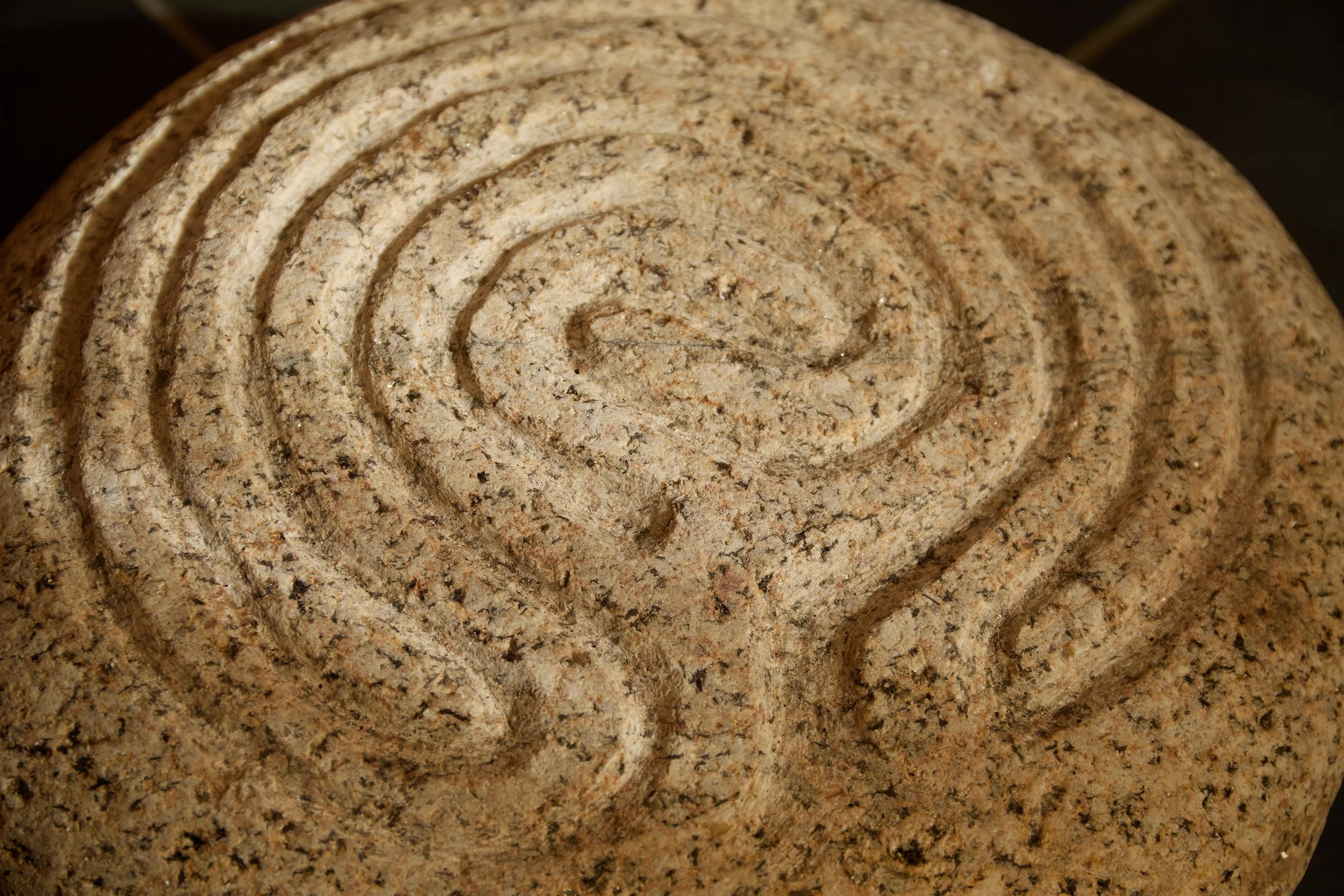
The carving of Troy Town Maze - the maze made of pebbles becomes the maze on a pebble…