Ruins of the Stony Porth Labyrinth
During a recent walk with archaeologist Katharine Sawyer on Bryher, she drew my attention to a Scilly labyrinth that we hadn’t been aware of before. This square labyrinth is close to Stony Porth on the south side of the island. It has been almost entirely overgrown with marram grass, but it looks as if it was originally of a square construction, with straight lines and clear right angle corners. These are less common than the round mazes and labyrinths found on Scilly, but there are the remains of some other square designs elsewhere on Bryher, by the surviving maze at Popplestones, and on St Martin’s at White Island Bar.
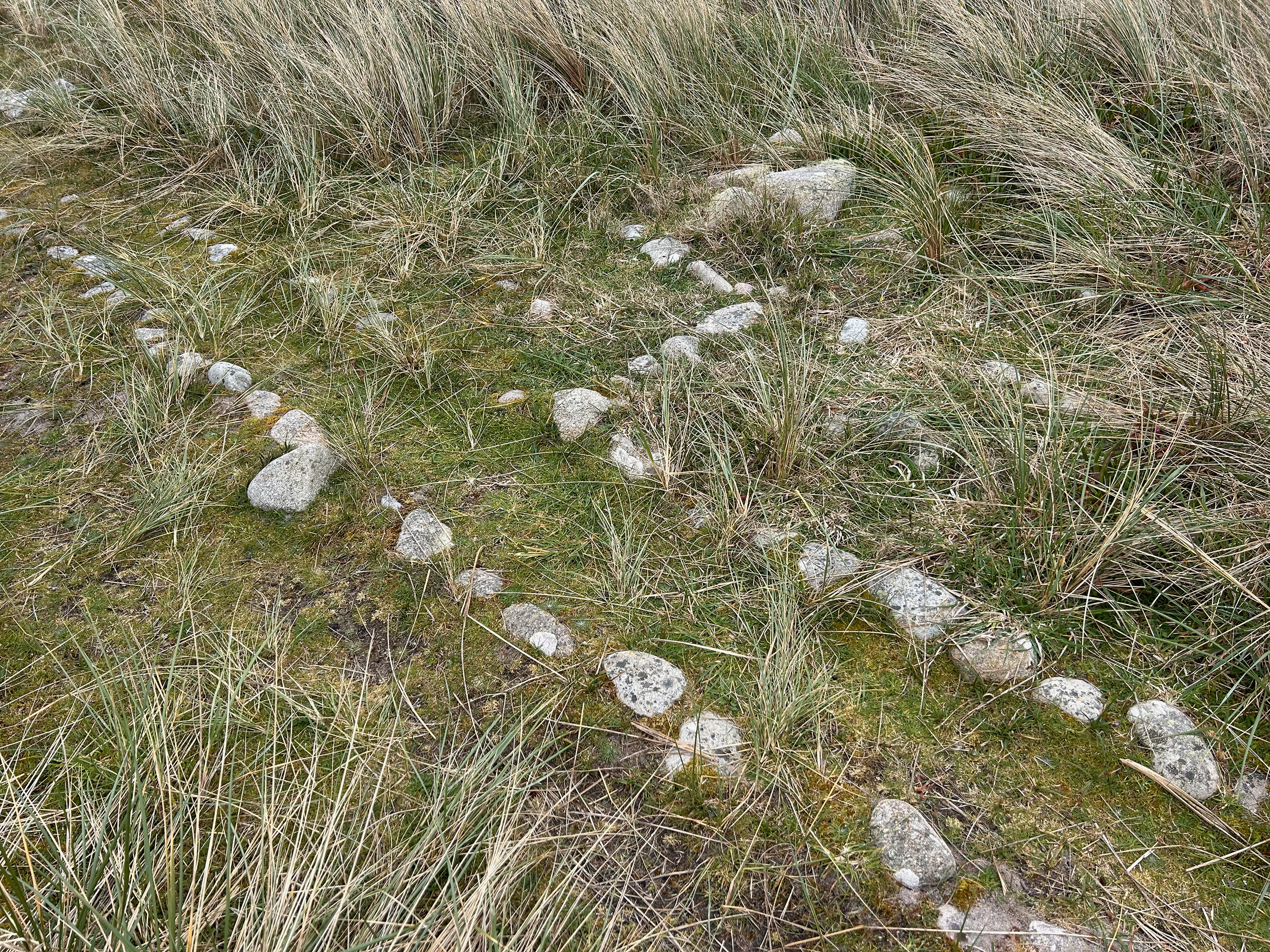
Some of the straight paths and perpendicular stone walls of the Stony Porth ruined labyrinth…
Katharine believes that this labyrinth was made in the early 2010s, which makes it on of the more recent examples on the islands, and she thinkgs it was made by a holiday maker. This probably accounts for its ruined state, as - once the maze-makers left the islands again - there was nobody here to tend to the maze and so it slowly deteriorated to its current situation. Katharine suggested that perhaps we might want to restore this one as part of our project, but I think it is probably best left to vanish - particularly as it is in quite close proximity to the extremely rare dwarf pansy plant that grows nearby, so it is not an area where we would want to encourage additional footfall.
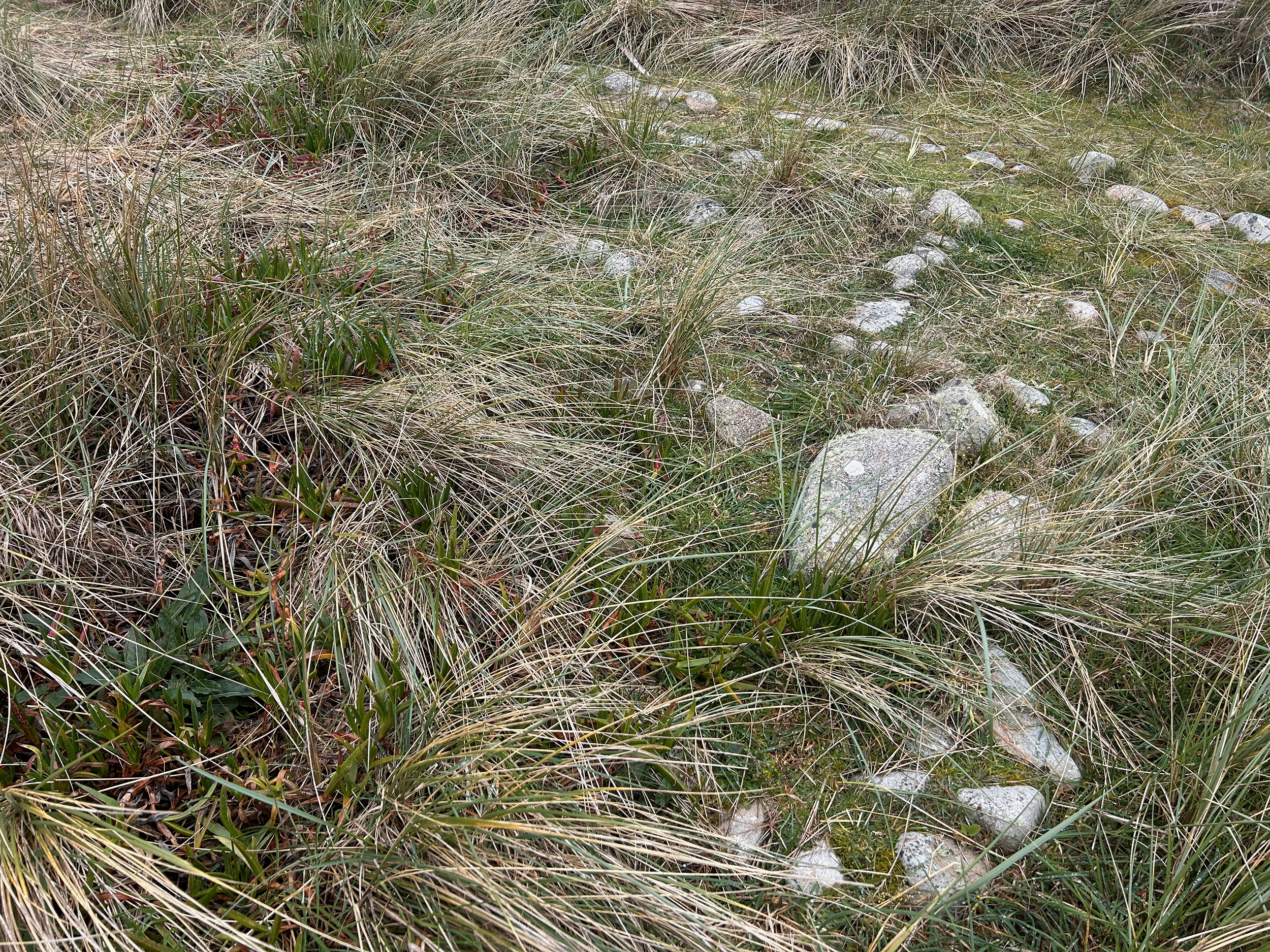
What was think was the centre of the labyrinth, now almost entirely overgrown…
We were lucky enough to see the dwarf pansy - a first for me! - as it is in bloom this time of year. This minute plant is notoriously hard to spot but luckily we had the help of some Bryher residents who showed us what to look for. They are so special - and extremely rare - I hope you will agree that protecting this incredible plant is more important that restoring another vanished labyrinth.
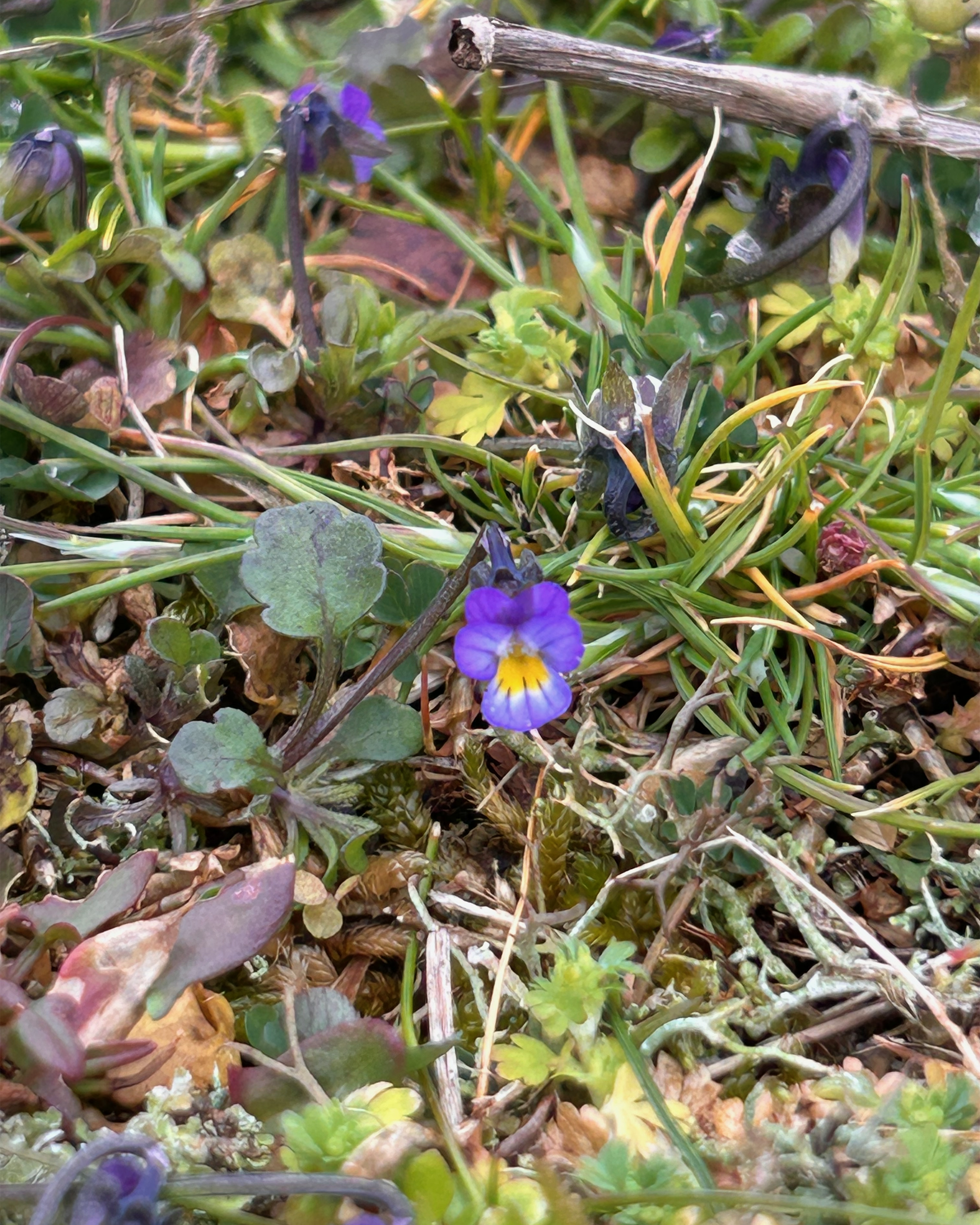
The minute dwarf pansy found on Bryher. ..
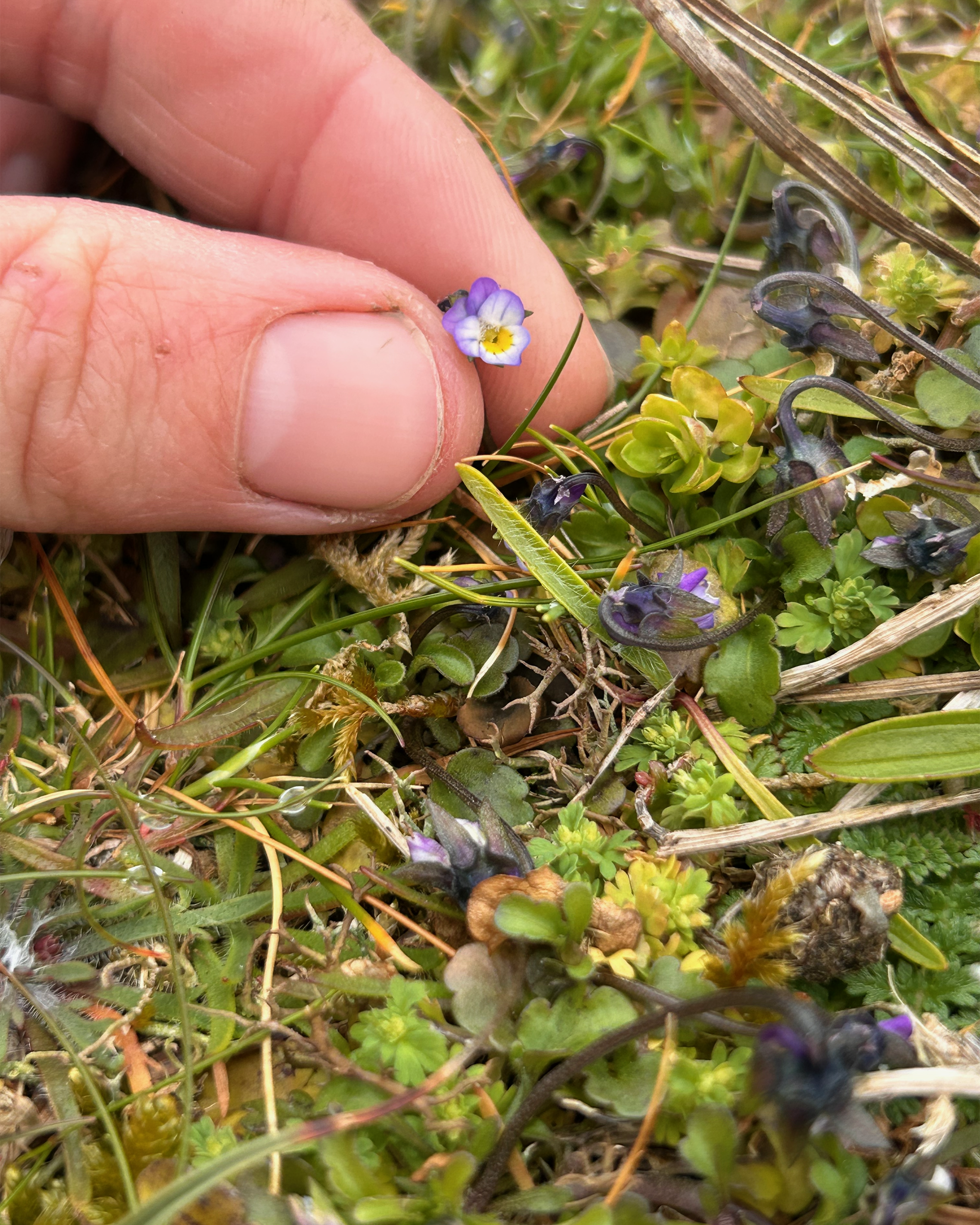
My thumb for scale - so tiny!